









A different education

WOW ©JoanaLinda
What if self-knowledge came first? Tanja Murgel-Subotic on The Adventures of Bodhi Wilder, a new entertainment and education platform that prioritizes emotional intelligence.
While modern education systems excel at producing skilled workers, they often graduate emotionally disconnected adults, and cultural visionary Tanja Murgel-Subotic, founder of Wonders of Wisdom, believes the solution begins with reimagining childhood and education itself.
Education for your child’s heart
“There is a deep yearning, and especially for this younger generation, there is a request for depth,” Tanja observes. Yet something curious is happening: people don’t quite know how to articulate what they’re seeking. “The defining of depth needs a little bit of work around it and the restructuring of understanding that because we’re just lacking wisdom.”
The irony is striking. In an age of unprecedented access to information, emotional intelligence, and self-knowledge, the very capacities that anchor a meaningful life are vanishing from formal education. Incidentally, our children are not being taught how to understand themselves, only how to function within systems that rarely ask who they are.


“Philosophy and methodology are dying in our school systems. They’re being cancelled out, which is sad and disconcerting,” Tanja says. “This is where that education component is being cut off from our humanity right now.”
To fill the void, Tanja has created the world of Bodhi Wilder for children.
The adventures of Bodhi Wilder
Young Bodhi Wilder has a secret. Hidden in a cave behind his house is a library his dad built, filled with artifacts from his travels across the world and through time. When Bodhi touches them, he’s whisked away on extraordinary adventures, meeting the greatest minds who ever lived, experiencing the world in all its brilliance, and bringing that wisdom home to help everyone around him grow.
“The power in Bodhi is that he is learning alongside our children, and that rather than exercises around language, math, science, and so on, his adventures teach him emotional intelligence,” Tanja says. “This is the key to helping children better understand themselves.”
Bodhi Wilder’s adventures see him travel to 15th-century Italy to meet Leonardo da Vinci, 13th-century Persia and Turkey to meet Rumi, and Ancient Greece to meet the Goddess Athena. With each adventure, Bodhi learns something about himself, the world, or the deeper wisdom that connects us all. Lessons include topics such as imagination as a gateway, how joy is a superpower, and how to develop a communion with nature.
The response suggests this need is already being felt. Within three weeks of launching, Bodhi’s YouTube channel has attracted more than 5 million views and 21,700 subscribers, a sign, Tanja believes, of a growing appetite for children’s content that does more than entertain.
Bodhi’s friends and tools
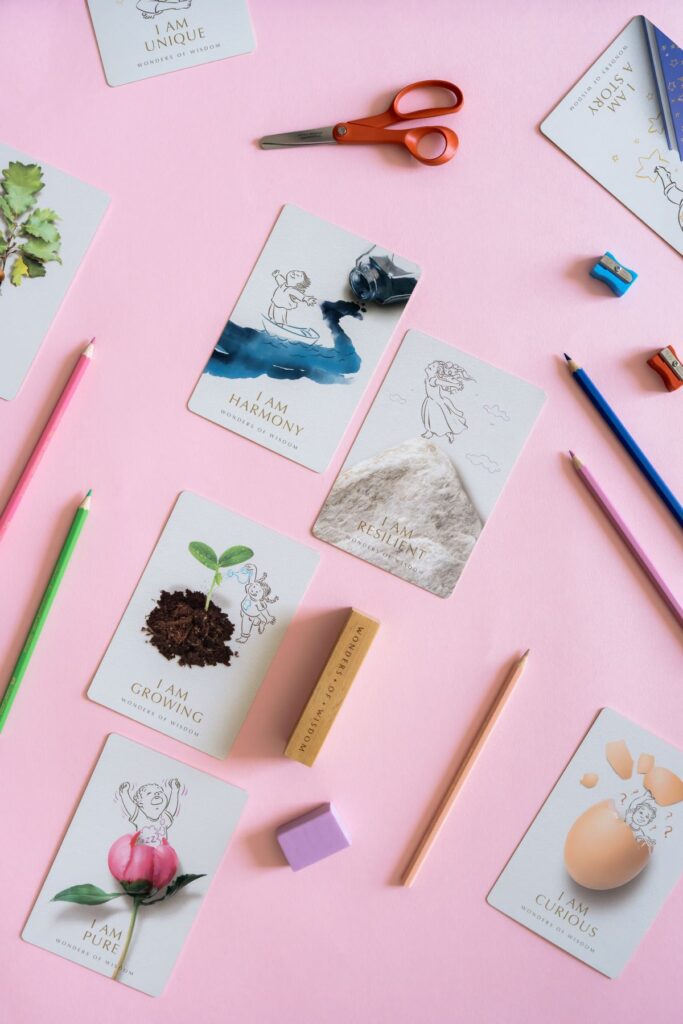
To help children integrate themselves fully into Bodhi’s world, Tanja has created the children’s tools under Wonders of Wisdom, the same ones Bodhi uses throughout his adventure. There’s the Wonder Tree Board, affirmation cards, seasonal journals, all designed to offer what she calls “the first education” in lived form. Rather than tracking achievement or goals, these tools invite children to reflect on who they are, express how they feel, and explore their inner world.
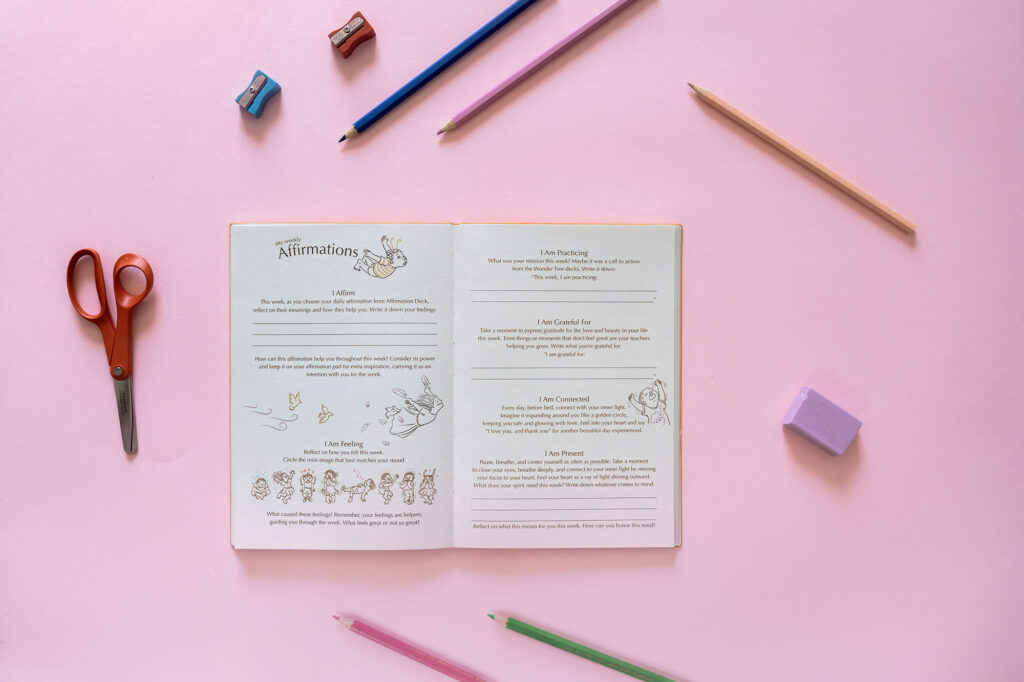
“We use the tree of life as a mirror and a mapping system,” she explains, referencing the Wonder Board’s visual framework that helps children understand themselves through natural cycles and growth.
She quotes Benjamin Franklin’s wisdom: “Teach me and I may learn, immerse me and I will become.” These tools, available on Wonders of Wisdom’s website, allow children to immerse themselves.
“A lot of the geniuses which I pursued to understand in my life, their innovations, their life-changing contributions to the story of evolution didn’t come from the rational mind first. It came from the heart-expanding imagination gateway process.” These tools from Bodhi’s world do just that, help to expand the heart rather than just the mind.
Education as remembering
Perhaps the most radical aspect of Tanja’s vision and the idea behind Bodhi Wilder is this: she’s not proposing we teach children something new, but rather that we help them stay connected to something they already possess.
Creativity isn’t a talent reserved for a few; emotional intelligence isn’t a skill to be acquired later. These are innate capacities that current systems systematically erode. Bodhi helps our children to reconnect with what they already know.
“In order to connect yourself as a creator and not just a survivor of this world, you must know who you truly are,” she says. The same is true for our children.
If that seems obvious, consider how rarely formal education addresses the question of who rather than what, who you are versus what you know, what you can do, what you can produce.
For a culture increasingly aware that something essential has been lost, the Bodhi Wilder series offers a proposition both simple and profound: what if we began where we should have all along, with the self?
That’s what Bodhi is here to answer.