









2026 will redefine how brands communicate. Are businesses ready?
Marketing and public relations are entering a decisive turning point. The frameworks that guided brand visibility, growth, and desirability over the past decade are no longer sufficient. In 2026, success will not be driven by louder messaging, larger budgets, or increased content output, but by clarity, relevance, and connection.
Across industries, business owners are facing the same tension: more tools, more platforms, more data, yet less attention, less trust, and increasingly fragmented audiences. At the same time, technological acceleration, especially in artificial intelligence, is reshaping how consumers discover brands, evaluate credibility, and make decisions.
For businesses operating in competitive and high-expectation environments such as Monaco, these shifts are not abstract trends. They directly affect visibility, reputation, and long-term value.
From visibility to discoverability in an AI-first world
One of the most structural changes underway concerns how brands are discovered. Traditional search engines, paid media, and even social platforms are gradually losing their dominance at the top of the customer journey. Instead, consumers are increasingly turning to AI-powered assistants and recommendation systems to research, compare, and validate brands.
This shift fundamentally changes the role of marketing and PR. Being present online is no longer enough. Brands must now be understandable to AI systems, meaning their messaging, positioning, and digital footprint must be coherent, credible, and strategically structured. Storytelling, press coverage, and thought leadership are no longer “nice to have”; they actively influence whether a brand appears, or disappears, in AI-generated recommendations
The return of intimacy and personalised relationships
At the same time, consumer expectations are moving in the opposite direction of mass communication. As markets stabilise and discretionary spending becomes more selective, clients expect brands to recognise them, understand them, and speak to them personally.
This does not mean more emails or more automated messages. On the contrary, communication fatigue is growing. What stands out in 2026 is relevance. Brands that invest in intelligent clienteling, combining human insight with AI-driven analysis, are able to create fewer but more meaningful touchpoints. Personalisation becomes a strategic differentiator, not through scale, but through intention.
Value must be communicated, not assumed
Another key shift concerns how value is perceived. After years of rapid growth and price-led positioning, consumers are reassessing what justifies a premium. In 2026, brands are expected to demonstrate their value through expertise, craftsmanship, creativity, and narrative coherence.
This repositions storytelling as a core strategic asset. How a product or service is created, why it exists, and what it stands for matter as much as the offering itself. PR regains depth, moving away from hype and towards credibility, founder narratives, and behind-the-scenes storytelling that reinforces trust and authority.
Experiences as brand language
Beyond digital communication, physical and hybrid experiences are becoming central to brand strategy. Events are no longer standalone moments or simple launches; they are immersive expressions of brand identity. Sensory, narrative-driven activations allow brands to be experienced rather than explained.
In markets where products and services can appear increasingly similar, experience becomes the language through which differentiation is felt. These moments are also designed to live beyond the event itself, generating organic content, emotional memory, and long-term affinity.
From influencers to communities
Finally, the role of influence is evolving. While influencer marketing remains relevant, its dominance is giving way to something more sustainable: community. Brands are increasingly investing in events and initiatives that place real clients, loyal audiences, and brand advocates at the centre.
Community-centric strategies foster authenticity, trust, and organic advocacy. They transform customers from spectators into participants and reinforce a sense of belonging that cannot be replicated through sponsored content alone.
From insight to action
These shifts outline a clear direction for 2026: brands must move from exposure to experience, from volume to value, and from campaigns to connection. However, understanding trends is only the first step.
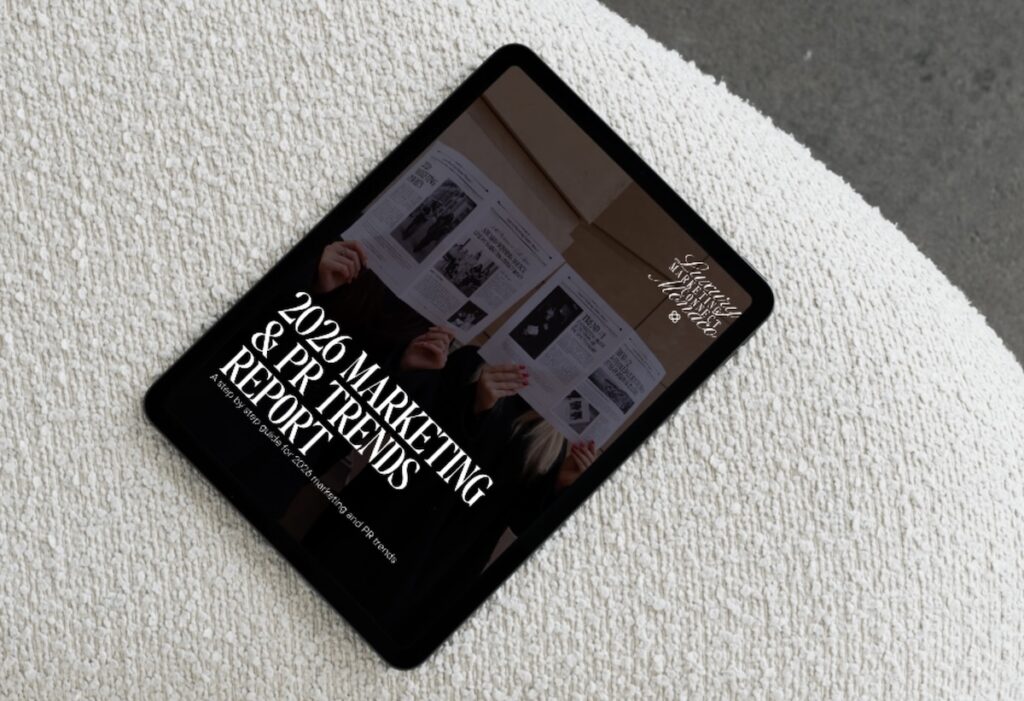
For business owners who want to go further, the 2026 Marketing & PR Trends Report by Luxury Marketing Connect Monaco expands on these transformations in depth, translating global research and market signals into five strategic trends shaping the year ahead. More importantly, those who download the report also gain access to a complementary practical workbook, designed to help brands assess their positioning, clarify priorities, and begin applying these insights directly to their own business.
In a landscape defined by rapid change, the brands that will lead in 2026 are not those that do more, but those that act with clarity, intention, and strategic alignment.
Download the 2026 Marketing & PR Trends Report here.
Author: Carolina Gonzalez