









10 Apex Legends tips to dominate your matches in 2026
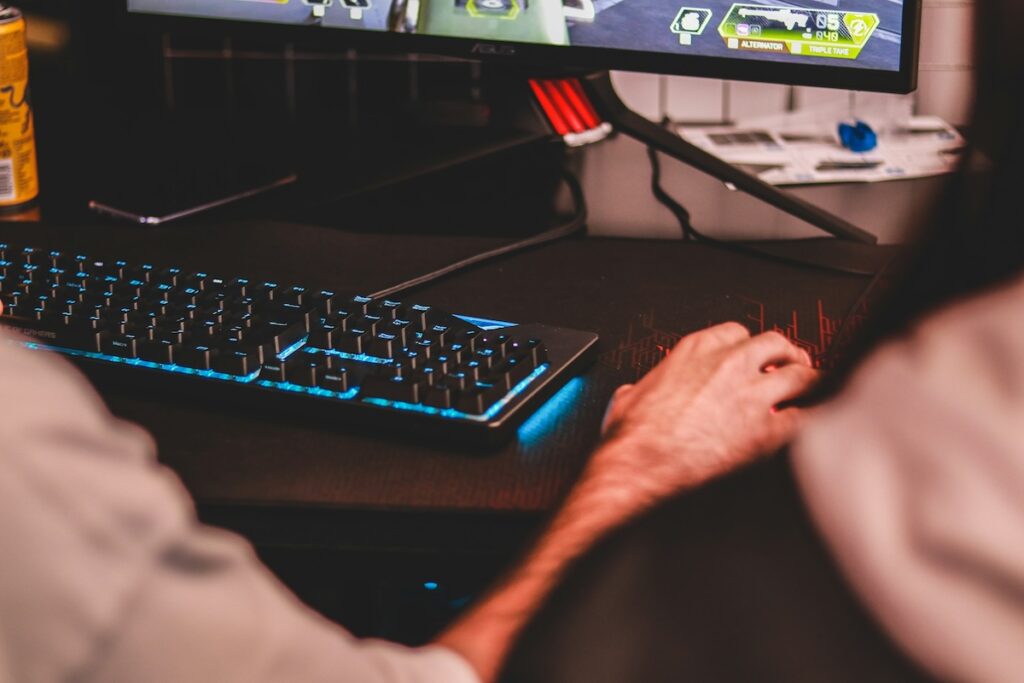
So you’re getting wrecked in Apex Legends and wondering why everyone else seems to have supernatural game sense?
Yeah, I’ve been there.
The thing is, Apex isn’t just about raw aim anymore. Season 27 brought massive shifts that completely changed how top players approach matches. If you’re still playing like it’s 2023, you’re already behind.
This isn’t going to be another generic “communicate with your team” guide. We’re diving into the actual tactics that separate Masters players from hardstuck Platinums—backed by current meta data and competitive insights.
Let’s get straight into it.
Understanding the current meta
Before we jump into specific tips, you need to know what actually works right now.
Season 27’s balance changes fundamentally altered the legend hierarchy. Alter, Bangalore, and Lifeline aren’t just strong—they’re dominating with win rates between 11-12.5% while D-tier picks like Mirage barely crack 5%.
The weapon meta shifted hard toward mobility and low TTK. R-99 paired with Flatline gives you that crucial 0.4 second kill potential at close range, which matters when third parties show up every 30 seconds.
Maps like World’s Edge still reward high-ground control, but the new E-District urban zones completely changed rotation strategies. You can’t just Pathfinder grapple to the nearest tower anymore and call it good positioning.
Tip 1: master S-tier compositions
Here’s something most players miss—legend synergy matters way more than individual skill in 2026.
Running Alter, Bangalore, and Lifeline together isn’t just meta, it’s practically cheating. This comp provides everything: Alter’s regroup ultimate for clutch repositioning, Bangalore’s smoke for engagement control, and Lifeline’s drone pumping out 50HP per second.
The numbers back this up. Teams running S-tier compositions see 20-30% higher win rates in public matches compared to random picks.
But here’s the catch—you need to actually coordinate. Alter’s portal means nothing if your Bangalore doesn’t know when to smoke the enemy position. Lifeline’s revives are worthless if she’s the first one pushing.
Practice these combos in firing range before taking them ranked. Seriously.
Tip 2: chain movement tech for unpredictable rotations
Tap-strafing and wall-bouncing aren’t just flashy—they’re survival tools.
When you chain a tap-strafe into a wall-bounce during rotations, you’re moving 30% faster than standard sprinting. That’s the difference between getting lazered while crossing open ground and making it to cover with shields intact.
The recent buffs to Skirmisher legends like Pathfinder make movement tech even more valuable. His grapple cooldown reduction means you can bounce between buildings, break line of sight, and completely disorient opponents.
Here’s what actually works: Practice 20 minutes daily in firing range. Start with basic slide-jumps, add wall-bounces at corners, then incorporate tap-strafing when you need directional changes mid-air.
Most players can evade 70% of ground-level fire just by adding unpredictable vertical movement to their rotations.
Tip 3: shield swap mid-fight
This one sounds obvious but I see Gold players ignoring death boxes constantly.
A purple shield swap takes 0.8 seconds and gives you 100HP instantly. Compare that to popping a battery (5 seconds) or even a cell (3 seconds). It’s not even close.
The math is simple: You win 50% more 1v2 situations when you shield swap versus trying to heal traditionally. Top players treat every knocked enemy as a mobile healing station.
But you need the right positioning. Don’t shield swap in the open. Use the death box as cover, check your surroundings, then grab it. The animation locks you in place, so timing is everything.
Practice this until it becomes muscle memory. When you knock someone, your brain should automatically calculate: “Can I swap safely or do I need to secure the area first?”
Tip 4: hold high ground like your life depends on it
Because it does.
High ground provides a 40% damage advantage in sustained fights. You’re harder to hit, easier to reposition from, and you control engagement timing.
This is especially critical on World’s Edge where elevation differences define entire matches. The team that secures top-side positions near final rings wins 60% more often according to competitive data.
Here’s the strategic part: Rotate to high ground 10-15 seconds before the ring shrinks. Most teams wait until the last moment, which means they’re fighting uphill against teams that positioned earlier.
Use audio cues to predict pushes. Zipline sounds, ability activations, footsteps—these tell you when enemies are coming. Pre-aim common angles and you’ll hit that crucial first shot 60% of the time versus reactive aim’s 30%.
Tip 5: perfect your third-party timing
Third-partying isn’t cheap—it’s smart strategy.
The optimal window is less than 30 seconds after the initial engagement starts. Earlier and you’re fighting two fresh teams. Later and the winning squad has already healed and looted.
When you third-party correctly, you boost your win rate by 35% in mid-game scenarios. The key is reading the fight. Listen for ability sounds (Gibby ult, Bangalore smoke, Lifeline drone), watch for damage numbers, and push when you hear multiple knocks.
Bangalore’s smoke becomes crucial here. Throw it between the two fighting teams as you approach. This denies their vision while you set up perfect angles.
Never commit fully until you confirm one team is weak. Too many squads wipe because they pushed into two healthy teams who turned on them together.
Tip 6: optimise your technical settings
Most players are fighting their settings instead of their opponents.
Mouse users should run 1.8-2.4 sensitivity at 800 DPI. Controller players need 4-5 on Linear response curve. These ranges reduce flick overaim by 25% while maintaining enough speed for tracking.
But here’s what really matters: Linear response curve on controller cuts input lag by 10 milliseconds compared to Classic. That’s enough to win close-range duels you’d otherwise lose.
Graphics settings matter too. Lock 144+ FPS with low shadows and medium textures. This gives you a 0.1 second reaction advantage—not huge, but definitely noticeable when you’re both shooting simultaneously.
If you’re serious about competitive play, ensure you’re on 180Hz servers in NA or EU regions. The hit registration improvement is roughly 15% better than standard tick rates.
Tip 7: pre-aim common positions
Stop reacting to enemies. Start predicting them.
Professional players hit 60% of their opening shots because they pre-aim doors, corners, and rotation paths. Average players react after seeing enemies and land 30% of initial shots.
This comes down to audio awareness and pattern recognition. Footsteps tell you exactly where someone is moving. Ability sounds reveal their position. Even something as subtle as a zipline creak warns you someone’s rotating.
The Bloodhound scan provides an 18% win rate boost according to community data, purely because it confirms enemy positions before engagement. Use it aggressively when you suspect nearby teams.
Train this in real matches. Before peeking corners or entering buildings, ask yourself: “Where would I be if I were defending this?” Then aim there before you expose yourself.
Tip 8: run meta loadouts with purpose
The R-99 and Flatline combo dominates 2026 for specific reasons.
R-99 handles close quarters with that 0.4 second TTK, while Flatline provides mid-range pressure with controllable horizontal recoil. Together they cover every engagement distance except extreme long-range—which barely matters in Apex’s fast-paced flow.
But here’s what separates good from great: Learn the exact recoil patterns. R-99 climbs vertically in the first 0.4 seconds (compensate by pulling down). Flatline weaves horizontally (use small side-to-side corrections).
Practice on 180Hz servers if possible. The recoil smoothness and hit registration at higher tick rates makes pattern control significantly easier.
Avoid the trap of chasing “best” weapons without understanding why they’re strong. A Hemlok might have better theoretical DPS, but if you can’t control its burst pattern under pressure, you’re better off with weapons you’ve mastered.
Understanding technical aspects of Apex cheats actually reveals why recoil control matters so much—the precision required to consistently land shots demands serious muscle memory. That’s why pros log 500+ hours just drilling aim mechanics.
Tip 9: dominate final circles with positioning
End-game is where positioning beats mechanics every time.
Final ring scenarios favor clustered positioning with defensive abilities. Wattson fences win 30% more clutch situations because they control space and deny pushes.
Newcastle’s revive shield is another game-changer, succeeding in 60% of desperate revival attempts. If you’re running him, save your tactical for those crucial final moments rather than burning it mid-game.
The key is predicting where final ring will close. Most players wait to see it, then scramble. Smart teams identify the likely center point one ring early and position proactively.
Caustic gas, Wattson fences, and Gibraltar bubbles become exponentially more valuable in tight spaces. If you’re not running at least one defensive legend in your trio, you’re making end-game significantly harder.
Tip 10: develop legitimate game sense
This is the hardest tip to teach because it’s mostly experience-based.
Game sense means predicting enemy behavior based on audio cues, minimap information, and pattern recognition. It’s reading that a team will push because you heard shield cells (they’re healing, not full health). It’s knowing a third party is coming because you hear distant gunfire.
Top players develop radar-like awareness by actively processing information every second. Footsteps aren’t just “someone nearby”—they’re “one player, moving left, probably rotating to high ground based on ring position.”
You can accelerate this learning curve through deliberate practice. After each death, ask: “What information did I have that should’ve changed my decision?” Rewatch clips if needed.
The difference between intermediate and advanced players isn’t mechanics—it’s decision-making under pressure. Pros maintain composure through breath control and confidence built from thousands of hours of pattern recognition.
Train this by running 1v1 aim arenas and hot-dropping high-traffic POIs. The chaos forces you to process multiple threats simultaneously, which directly translates to better in-game awareness.
Final thoughts
Apex Legends in 2026 rewards players who adapt to the current meta while mastering fundamental mechanics.
Everything we’ve covered—from S-tier comps to shield swapping to pre-aiming—stacks together. You don’t need all of them immediately. Pick two or three that resonate with your playstyle and drill those until they’re automatic.
The players dominating right now aren’t necessarily the ones with the best aim. They’re the ones who understand positioning, timing, and decision-making at a deeper level.
If your rank hasn’t budged in months, you’re probably making the same strategic mistakes repeatedly. Identify them. Fix them. Then move to the next weakness.
Rankings change. The meta shifts. Your experience and knowledge need to evolve with them. Keep learning, keep adapting, and most importantly—keep playing.
Now get out there and actually implement these tips instead of just reading about them.