



The new Monaco buyer: family living, education and the evolution of prime property
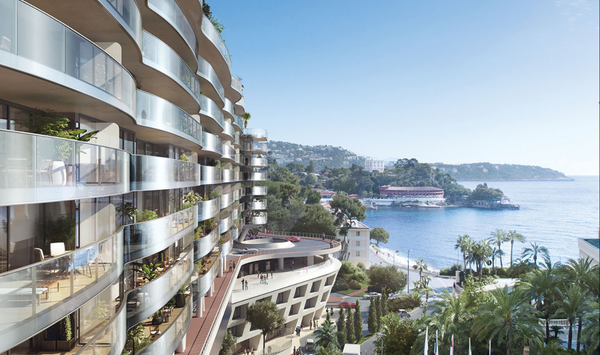
©Bay house Monaco
Monaco has long attracted international families for its safety, stability and quality of life.
What has changed over the past decade is not the Principality’s appeal, but the number of people choosing to settle in and raise families.
Max Dekkers, director of Dameno Monaco Real Estate, has observed that evolution across two generations of Monaco’s school system. Born and raised in the Principality, he now has three children attending school here themselves. Having experienced Monaco both as a student and now as a parent and real estate professional, he has seen how the market and wider infrastructure have adapted to a more international, family-oriented resident base.
“The quality of life was already exceptional when I grew up here,” he explains. “What has evolved significantly is the infrastructure supporting family life and international education.”


That evolution is increasingly visible across the Principality. More buyers and tenants are relocating to Monaco full-time with children, and the government has invested consistently in the infrastructure needed to support that shift, particularly in education.
Investment in education and international standards
Recent years have seen major investment across Monaco’s school system. FANB has been significantly expanded, Charles III completely redeveloped, and Lycée Albert Ier restructured. Alongside institutions such as the International School of Monaco and the British School of Monaco, the wider educational environment has become markedly more international in outlook.
English now plays a far more integrated role within the curriculum, including within the French system itself. Beyond language learning, many subjects are taught directly in English, often by native-speaking teachers, allowing students to develop genuine academic fluency rather than simply conversational ability.
For many residents, education is becoming one of the Principality’s strongest long-term advantages. Families relocating from metropolitan centres such as London, Geneva, Zurich or Dubai are often looking not only for security and fiscal stability, but also for continuity in their children’s education and access to internationally recognised pathways. Monaco increasingly offers both. Students regularly continue on to universities across the United Kingdom, the United States and Europe, reinforcing the Principality’s position as an international environment rather than simply a residential jurisdiction.
A property market designed for family living
The structure of Monaco’s property market has evolved alongside this demand. Newer developments such as Bay House, Tour Odéon and the residences within Mareterra are notably different in composition from many older buildings in the Principality. Apartments are larger, with fewer units per building, greater privacy and layouts designed for long-term family living.
At the same time, Monaco’s existing residential stock has adapted. Over the past decade, many investors and owners have combined smaller apartments into larger residences better suited to full-time family life. In practice, the demand shaped the supply. Developers, architects and owners responded to what clients increasingly sought from Monaco.
Monaco’s future as a long-term family base
For professionals active in the market, that shift is now unmistakable. Max and his team at Dameno increasingly work with families prioritising practical considerations alongside location, including proximity to schools, functional layouts, outdoor space and long-term liveability. The agency is currently advising on several substantial family residences, including properties exceeding 600 square meters in Mareterra and more than 700 square meters at Bay House, directly above the International School of Monaco.
These properties reflect a broader evolution in the Principality itself. Monaco remains one of the world’s most established wealth centres, but increasingly it is also becoming one of Europe’s most complete environments for long-term family life.