

Prince Albert II and Princess Caroline open symposium on Monaco palace frescoes
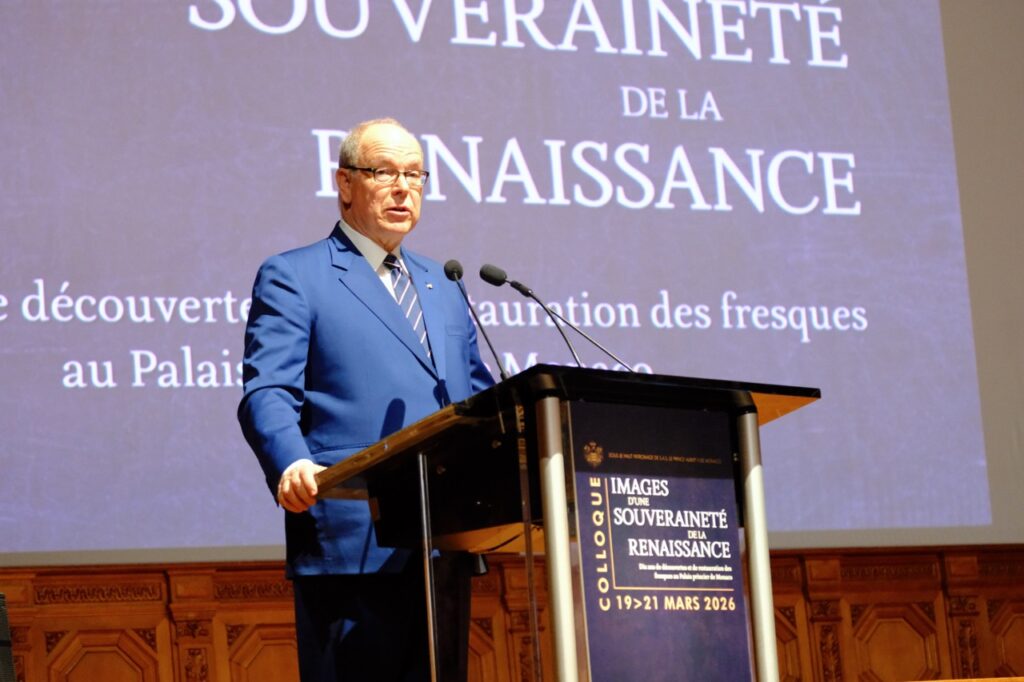
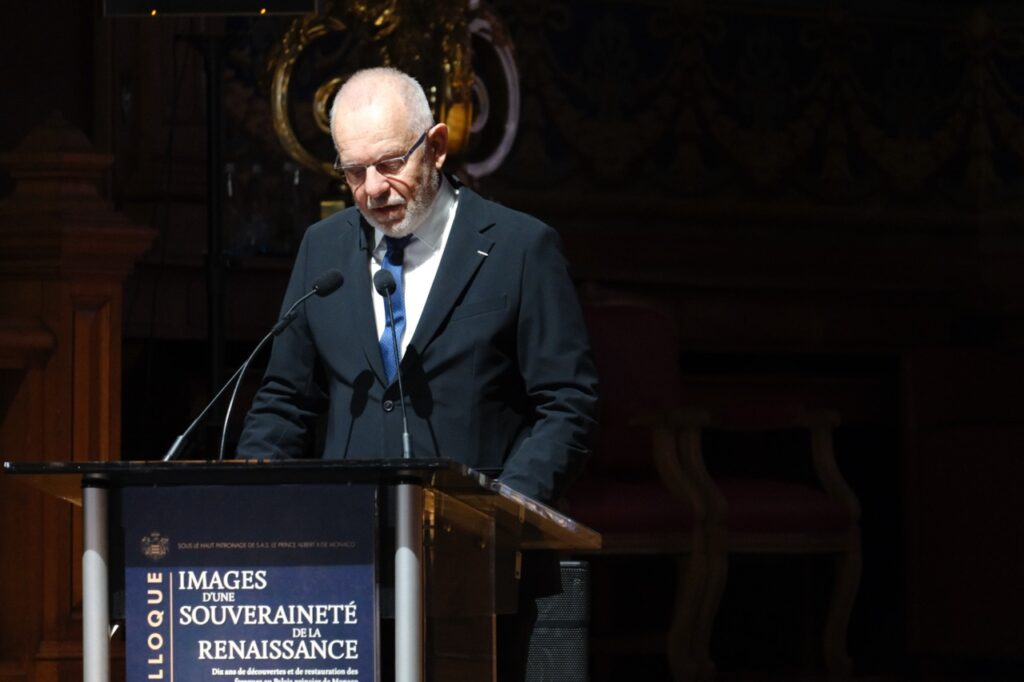
Prince Albert II delivered the opening address at the symposium © Monaco Tribune
An international symposium brings together researchers and conservators at the Oceanographic Museum to take stock of ten years of exceptional discoveries.
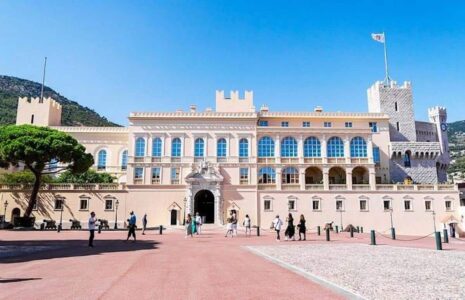
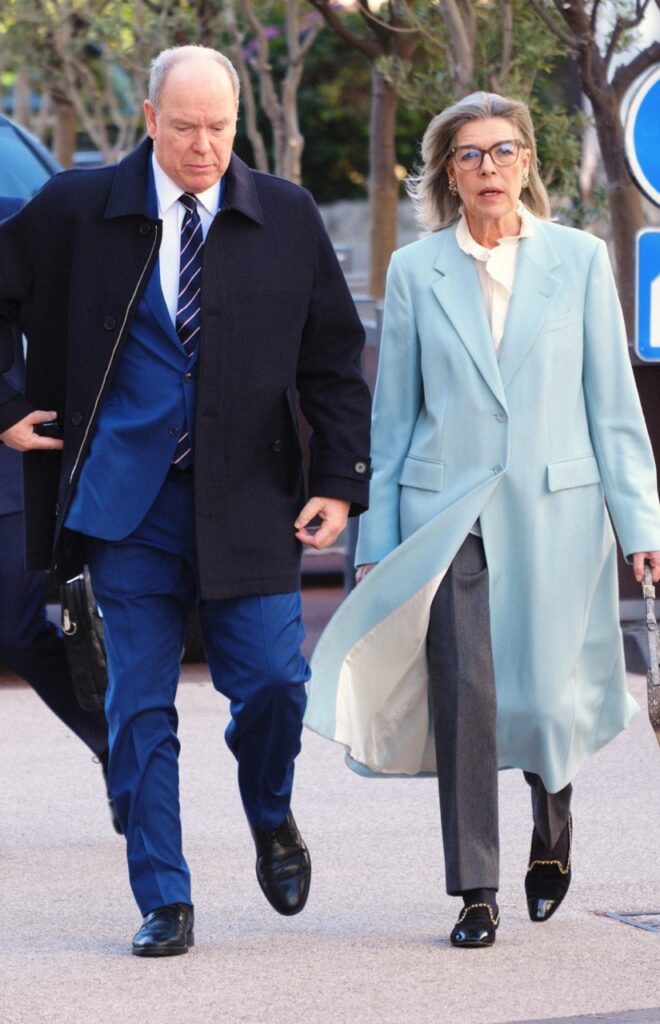
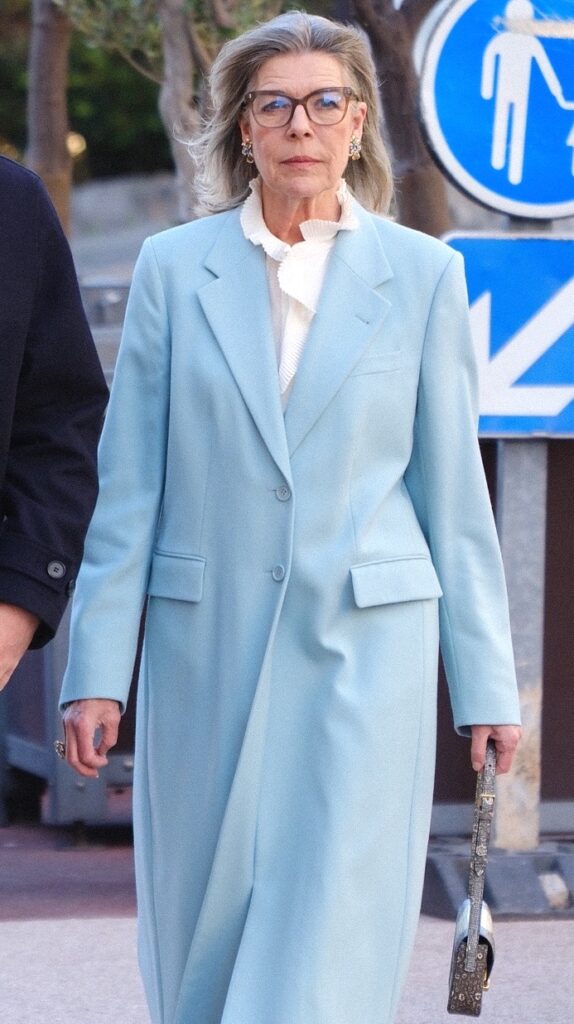
On Thursday 19 March, Prince Albert II and Princess Caroline opened a three-day scientific symposium dedicated to the Renaissance frescoes of the Prince’s Palace, at the Oceanographic Museum of Monaco. Entitled “Images of Renaissance Sovereignty”, this multidisciplinary event, chaired by Dominique Vingtain, Chief Curator of Heritage and Director of the Interdisciplinary Centre for the Conservation and Restoration of Heritage (CICRP), brings together researchers, art historians and curators from Italy, France and across Europe.
Ten years of work, an unexpected adventure
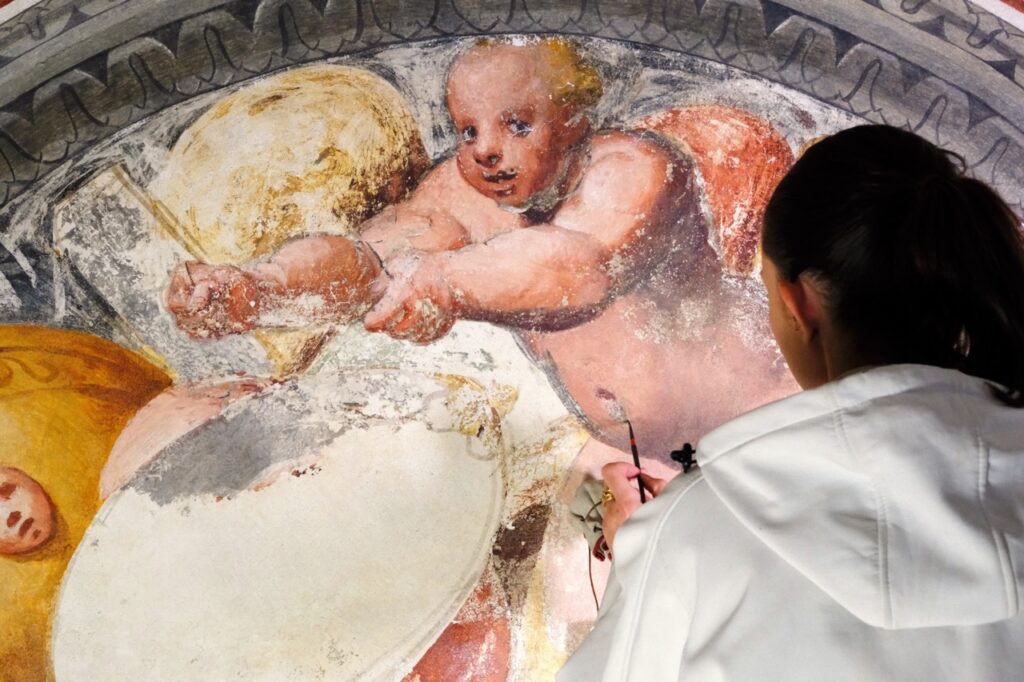
It all began in 2013 with a simple restoration project on the façades of the Cour d’honneur. At the time, no one suspected the presence of ancient paintings beneath the layers of time. It was in 2015 that the first colours appeared, gradually revealing a monumental collection of frescoes dating from the 16th century, a veritable painted allegory of the history of the Grimaldi family.
Between sky, argan and the Atlantic: Fairmont Taghazout Bay, where luxury drops anchor
By way of introduction, the Sovereign emphasised the importance of this interim report: “These paintings have much to tell you. The iconographic choices of my predecessors, the Monegasque Lords of the 16th century, are not without significance.” He also stated that “the final stages of restoration are expected to be completed in 2028”.
A project designed with sustainability in mind
Christian Gautier, head of the conservation-restoration project, in turn outlined the roadmap that has guided the project’s implementation, centred on three pillars: sustainable preventive conservation, the reduction of risks to both the artworks and the environment, and the dissemination of scientific knowledge. “This project was never conceived as a closed project. It was designed to be open to research and international collaboration,” he emphasised.
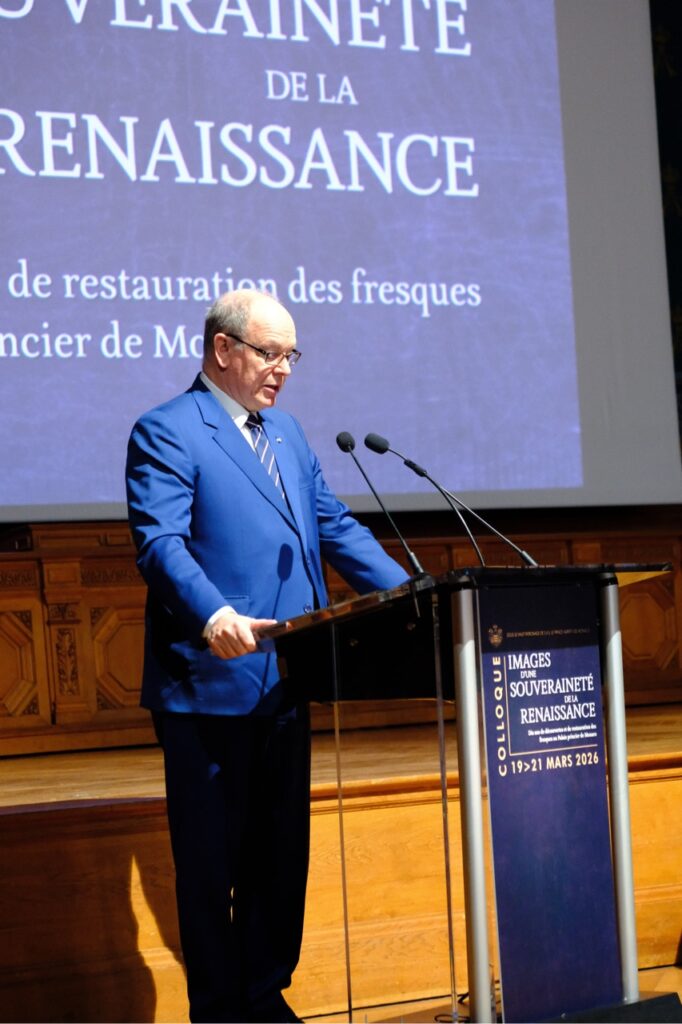
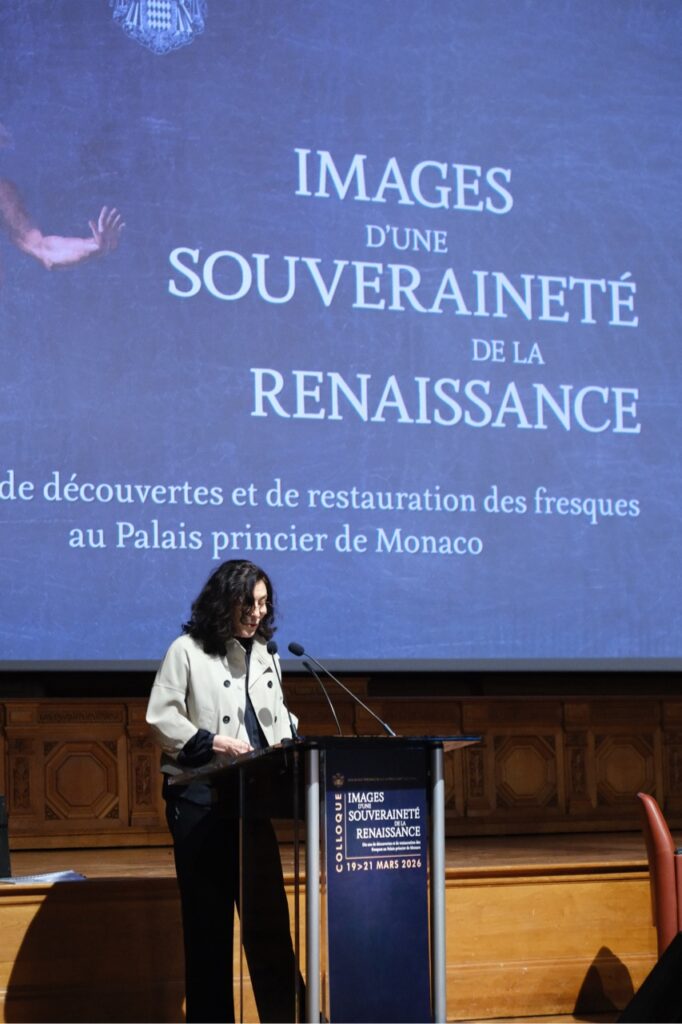
Some of the innovations presented on the second day included the use of lasers to clean the frescoes – a precision technology that avoids the use of chemical solvents – and the formulation of eco-friendly watercolours specially designed for pictorial retouching, in collaboration with the CICRP in Marseille. “This mixture, which we make ourselves without any chemical components, allows us to improve compatibility with the mineral material,” restorer Chloé Pasquier told us during our visit to the frescoes. Robert Calcagno, Director General of the Oceanographic Institute and host of the symposium, praised “an approach that naturally resonates with the values and missions of the Oceanographic Institute
After exploring the context in which the frescoes were created, as well as their political and symbolic significance, the symposium will continue on Friday with a discussion of the conservation and restoration methods employed. The proceedings of the symposium will be published in a special edition of the Annales Monégasques.