



The Mucha poster that elevated Monaco’s image: the story of an Art Nouveau masterpiece

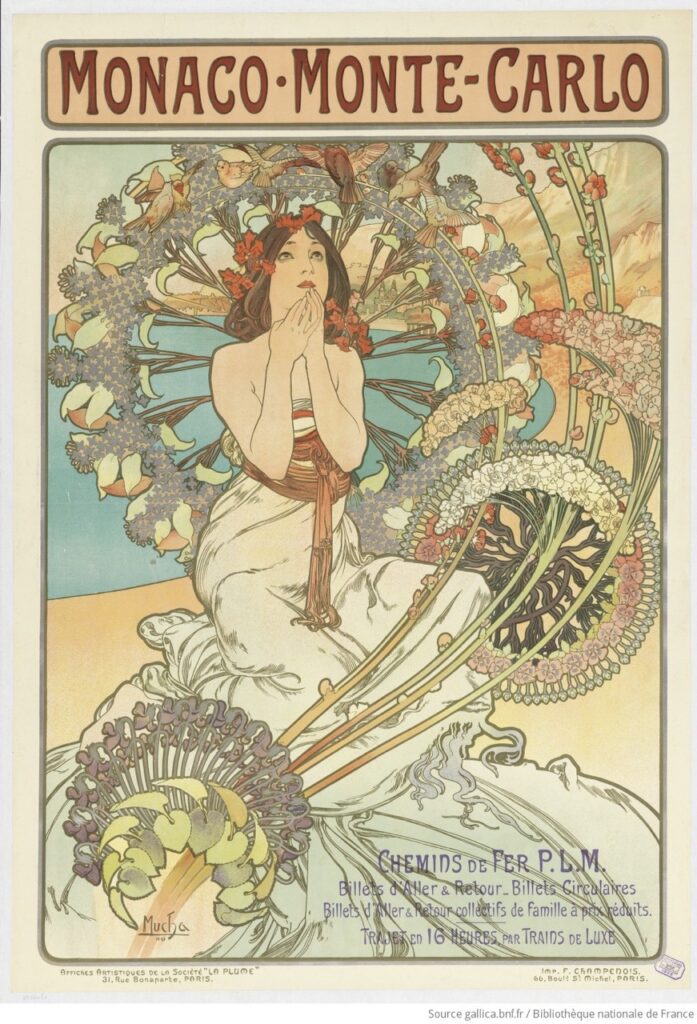
The Monaco – Monte-Carlo poster by Alphonse Mucha, dated 1897, bearing the PLM railway stamp © Bibliothèque nationale de France
In 1897, Czech artist Alphonse Mucha created an advertising poster that would become iconic, transforming Monaco into a destination of dreams for European travellers.
It’s 26 December 1894, in the Paris workshop of printer Lemercier. Legend has it, as told by the Mucha Foundation, that the 34-year-old Czech illustrator, still unknown to the general public, is helping out a friend by correcting proofs when Sarah Bernhardt, the greatest actress of her time, contacts the printer: she requests a poster for her new play, Gismonda. All the regular artists are on holiday. Alphonse Mucha accepts the challenge.
On 1 January 1895, Parisians discover a poster so revolutionary that they cut it down from the walls at night to take home. The “Mucha style” is born, and with it French Art Nouveau meets one of its masters.
Three years later, at the height of his fame, Mucha receives a commission from the Paris–Lyon–Mediterranean Railways (PLM). The railway company wished to promote its route to the French Riviera, a journey of more than twelve hours by luxury train to Monte-Carlo.
A principality seeking travellers
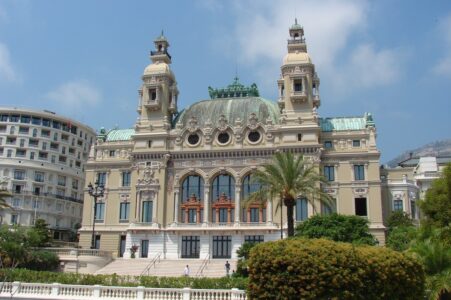
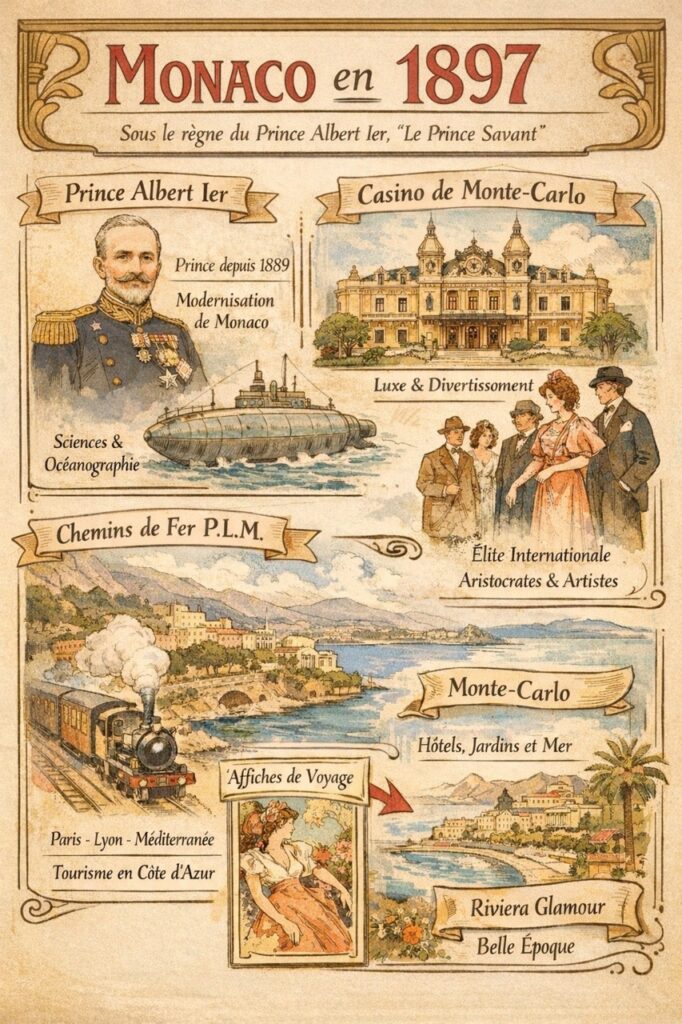
Monte-Carlo attracts a cosmopolitan clientele: aristocrats, artists, gaming and entertainment fans. Grand hotels, gardens and promenades sketch out an idealised city, a resort setting for the continent’s wealthy. This is the dream that PLM Railways wish to sell to Parisian travellers.
Monte-Carlo attracts a cosmopolitan clientele: aristocrats, artists, gaming and entertainment fans. Grand hotels, gardens and promenades sketch out an idealised city, a resort setting for the continent’s wealthy. This is the dream that PLM Railways wish to sell to Parisian travellers.
The art of selling a dream
For this commission, Mucha draws upon his entire artistic vocabulary. At the centre of the 108-by-74-centimetre lithograph, a young dark-haired woman, dressed in a flowing gown, clasps her hands before her face in an air of ecstatic contemplation. Her gaze drifts skywards, as though transported by the beauty of the place.
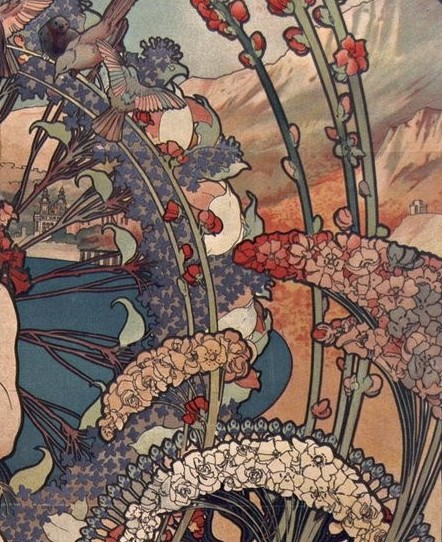
Around her, the artist composes one of his most sophisticated floral arrangements. Stems of lilac, hydrangea, carnation and violet entwine the female figure in an interlacing of curves characteristic of Art Nouveau. These sinuous lines are not merely ornamental: they subtly evoke the rails and wheels of the train that carries travellers to the Mediterranean paradise.
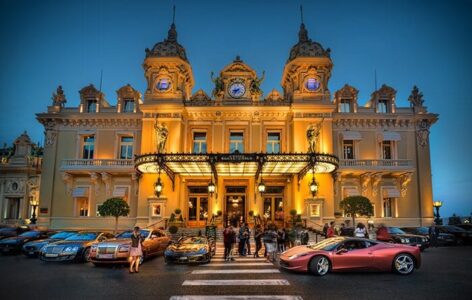
In the background, the deep blue sea and the coastal mountains sketch out the Monegasque landscape. The distinctive towers of the Monte-Carlo Casino can be made out, but they remain secondary. The true subject is the promise of sensual happiness, an enchanted interlude far from the Parisian greyness.
Monaco as an allegory of happiness
The poster, printed by Champenois in Paris, bears the words “Monaco Monte Carlo” in stylised lettering at the top. But Mucha is not selling a city: he is selling an emotion. The floral wreaths encircling the young woman evoke, according to an analysis published in Society and Style: Prints from the Sheldon Museum of Art (2014), “a roulette wheel and the promise of fortune that accompanies the journey”.
The work bears witness to the advertising genius of the period, when the poster was the primary vehicle for promotion. Art Nouveau, then in full bloom, offered Monaco the perfect showcase to appeal to a cultivated and elegant clientele.
Now held in private collections and a handful of museums, including the Museu Nacional d’Art de Catalunya in Barcelona and the Bibliothèque Nationale de France, the “Monaco Monte-Carlo” poster remains a reflection of its era. It reminds us that long before contemporary marketing campaigns, a Czech artist was able, with a few brushstrokes, to capture the essence of a Monaco dream that has endured for more than a century.