


French Riviera Art Guide: a free online resource to explore Côte d’Azur’s artistic heritage
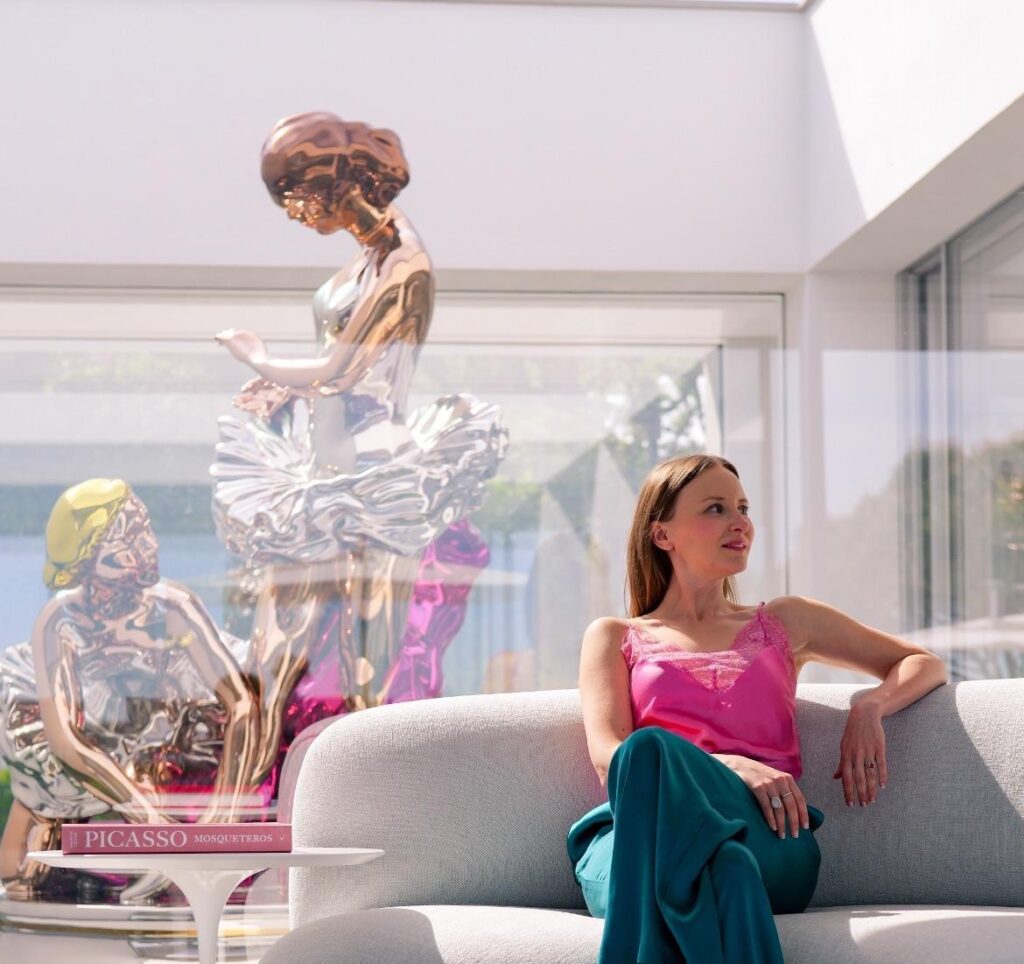
Alisa Mamonova in front of a sculpture from Jeff Koons’ Ballerinas series, part of a private collection at Villa Ama in Saint-Tropez © Kiri Huhtanen
Founder of the Art Trotter online platform and editor of a digital art guide dedicated to the Côte d’Azur, Alisa Mamonova replicated her innovative Scandinavian project to showcase the treasures of Mediterranean artistic heritage.
Monaco Tribune: Where did the idea for the French Riviera Art Guide come from and what exactly is it?
Alisa Mamonova: The concept first emerged in Scandinavia, where I created and launched The Art Trotter, a digital platform dedicated to making art more accessible. The goal is simple: to bring art within everyone’s reach. One of these initiatives was the creation of the Digital Art Guide in Norway, which we launched four years ago to cover the whole country. Since then, its success gone from strength to strength. Our users rely on it as a true travel companion and a source of inspiration, whether for a day trip, a half-day outing, or even a road trip. The idea is not only to suggest places to visit, but also to offer a personalised immersive experience that sparks curiosity and interest. Last year, we launched a specific guide for the Côte d’Azur – with its exceptional artistic heritage, the region was a natural next step. It’s a place I’ve known almost since childhood and I wanted to bring our concept here to highlight its cultural richness.
Can you give us an example of the incredible artistic heritage?
Since the late 19th century, the Côte d’Azur has fascinated artists, seduced by nature, the light and the mild Mediterranean winter. Monet painted in Monaco and Antibes, Renoir settled in an olive grove in Cagnes-sur-Mer. Then came Matisse, Chagall, Picasso, all of whom chose the coast to live and create. Later, Botero, Helmut Newton and Francis Bacon also forged a special connection with the region. In 160 years, the Côte d’Azur has become a true centre of modern art, rivalling Paris and even New York in the density and longevity of its artistic presence. Their legacy here is huge.
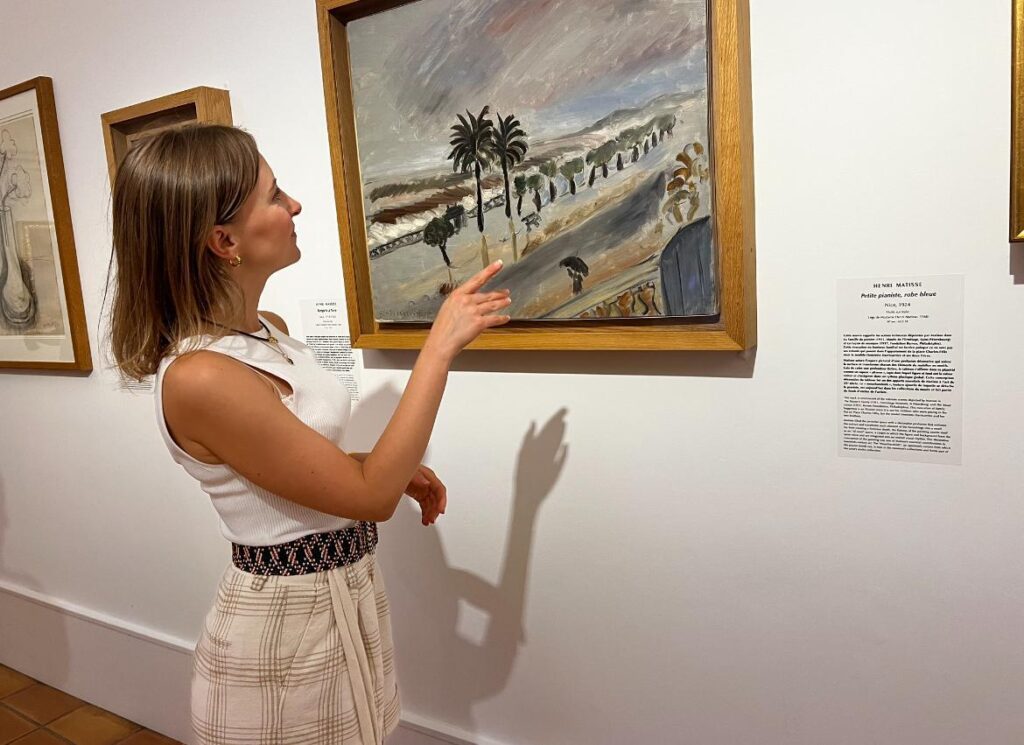
Henri Matisse’s Tempête à Nice (1919), at the Matisse Museum in Nice © The Art Trotter
How do you find balance in your guide with such different artists, including Coco Chanel, Matisse, and Picasso?
The contrast is precisely what makes this region so fascinating. I don’t necessarily seek balance; I simply want to guide visitors toward the best exhibitions and places to see during their stay. Diversity of choice allows them to discover multiple artistic periods, from the birth of Pointillism to Cubism and today’s conceptual art.
How do you make art accessible to the uninitiated?
It comes down to personal approach, the story one wants to tell and of course, the overall experience. It’s not just about visiting a museum, but about immersion whenever possible. In Saint-Paul-de-Vence, for example, I recommend combining the Maeght Foundation with lunch at La Colombe d’Or. The legendary restaurant welcomed many artists who sometimes paid for their meals with paintings, which are still displayed there today. It’s another way of reliving history.
What are your favourite places on the Côte d’Azur?
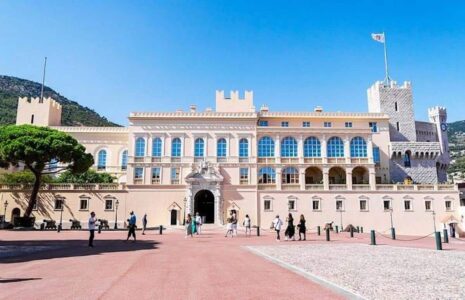
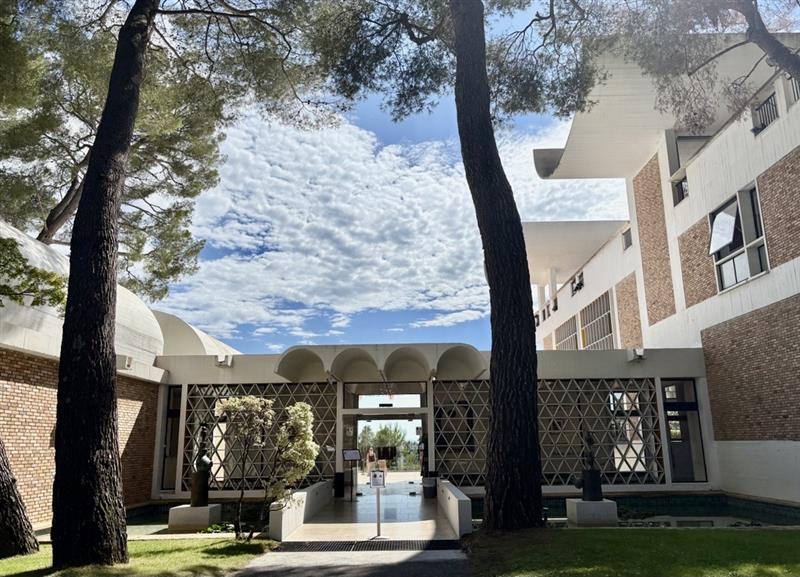
The Renoir Museum in Cagnes-sur-Mer offers a truly immersive and authentic experience. You follow in his footsteps, seeing his paintings, the olive groves and the orange trees just as he painted them a century ago. My second favourite is the Hartung-Bergman Foundation in Antibes. Anna-Eva Bergman was a Norwegian painter, married to Hans Hartung, when they settled there. In Monaco, I’d like to mention two highlights of this season: the Coco Chanel exhibition at the Nouveau Musée National de Monaco and the Grace Kelly exhibition at the Palace.
What feedback have you received and what are your plans for developing the guide? Who are your users?
The guide is free, because the aim is to make it accessible to all. The response has been excellent, both among foreign tourists and French visitors. But we also see strong interest from locals, families as well as young people, who want to rediscover the region through art. Contrary to popular belief, art doesn’t belong to one generation or another – it’s about curiosity and interest.
Many people now use social media like TikTok or Instagram to plan outings or holidays. What is your approach to social media?
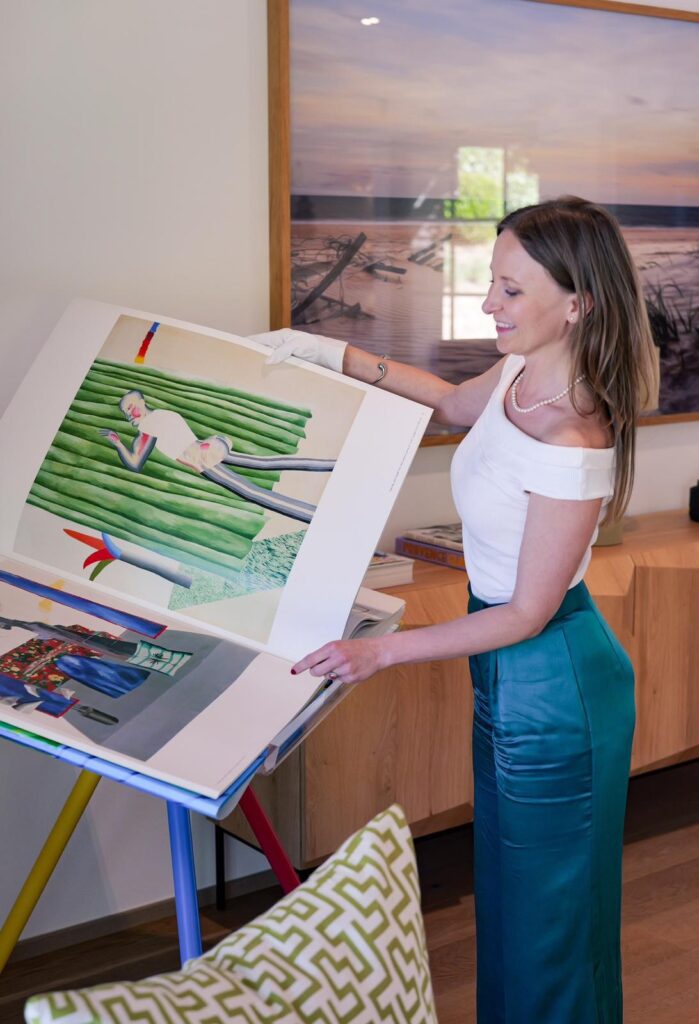
Social media is our main distribution channel. But compared to the fast content of social media, our guide is structured geographically, by area, with detailed and contextualised content. We don’t just tell you what you’re going to see: we explain why it’s unique and what you should take away from the experience. We’ve selected places that offer a world-class artistic experience, most of which showcase art and heritage you can only discover here, in this region.
Why did you choose an entirely digital format?
We’re trying to push boundaries. The art world remains quite traditional and the digital dimension is still relatively new. Many museums or cultural venues have only a limited online presence, while digital is now essential. It’s very easy to get information on your phone and access it at any time. That’s why our guide is optimised for smartphones, with an interactive map and a wishlist to plan visits.
The French Riviera Art Guide is available for free in English on The Art Trotter website and social media channels.