








AS Monaco brings partner clubs into the heart of daily operations

© ASM
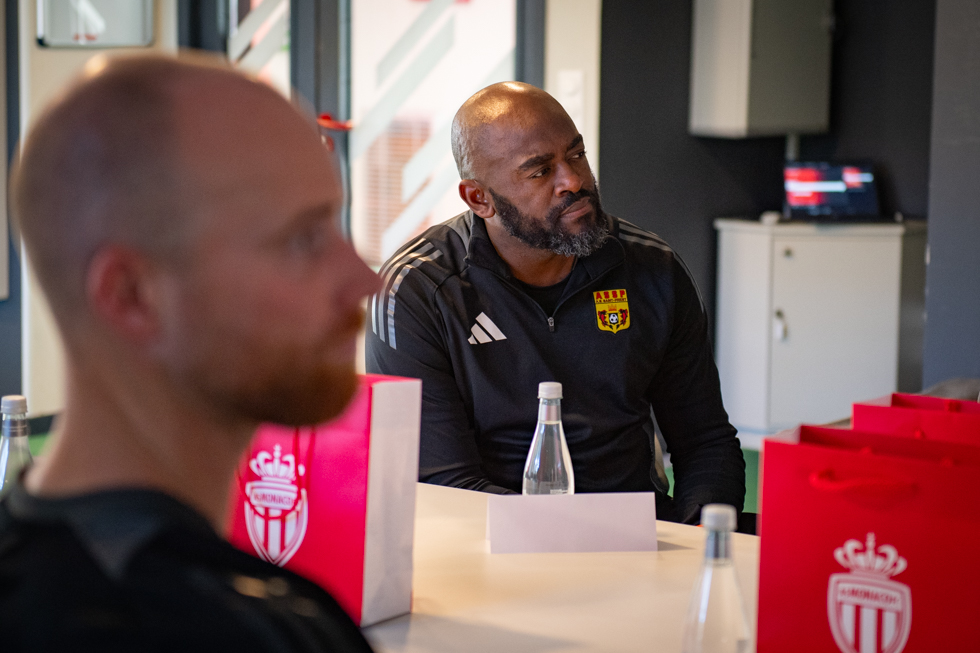
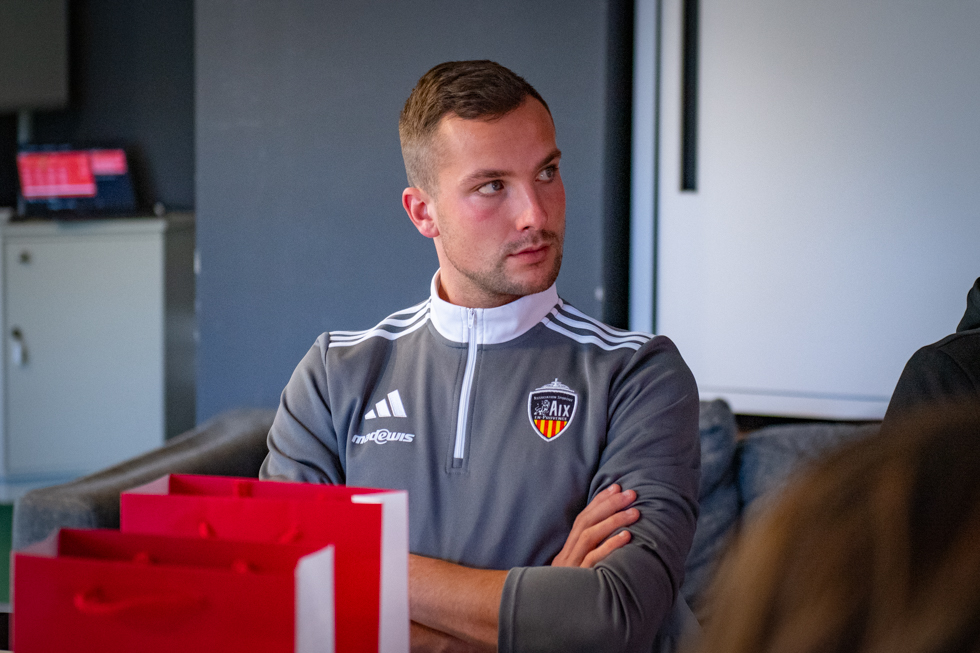
For three days, representatives of FC Versailles, AS Saint-Priest and AS Aix-en-Provence immersed themselves in day-to-day life at La Diagonale, AS Monaco’s training centre.
Fully immersed in the Monegasque Academy, the technical staff from the partner clubs followed an intensive programme: meetings with youth-team coaching staff, discussions with medical, socio-educational and academic supervisors, a presentation of how the Academy operates, participation in post-match analysis meetings… all topped off with two special fixtures: Youth League and Champions League matches against Galatasaray.
For Sébastien Muet, Director of AS Monaco’s training centre, the aim is clear: “The idea isn’t simply to have our name on a piece of paper signed with the clubs. It’s to be hands-on.” Organised during a European match week, the collaboration illustrates the club’s desire to build strong, mutually beneficial partnerships with the amateur world, represented here by FC Versailles, AS Saint-Priest and AS Aix-en-Provence.
Inside the daily life of a professional training centre
By opening its doors during a fixture week, AS Monaco allows its partners to attend the Academy’s usual technical meetings: the weekly programmes for the U17 and U19 national teams, physical preparation, the breakdown of each player’s individual performance during post-match debriefs.
“Today is Monday, it’s post-match day,” Sébastien Muet explained. “It’s about discussing what happened over the weekend, how the match serves each player’s individual development plan.” The approach gives amateur coaches clearer insight into the daily standards a professional training centre expects of its young players.
In Monaco, the young footballers joining La Diagonale must meet a specific profile: strong personal qualities, ambition, energy, game intelligence, adaptability and creativity leading to effective play. As for the coaches, they must also stand out: having strong teaching skills, being demanding but supportive, faithful to the club’s playing identity and focused on innovation. That identity has long been rooted in clear principles: rapid transitions, high pressing and aggressive ball recovery, an attacking, vertical style of play and very high possession.
For Alexis Faivre, U18 coach and head of pre-academy development at AS Saint-Priest near Lyon, the exchanges are particularly valuable: “They give us plenty of ideas for a very specific, personalised working methodology. They are avenues to follow and explore.”
Adapting elite-level methods to the realities of amateur football
But the major challenge remains: applying these insights to clubs with far more limited means. Mathieu Merle, Technical Director at FC Versailles, is well aware of this disparity: “Not everything can be transferred to an amateur club. They can work with squads of 20 to 22 players, whereas we can have 60 or 80 in the same age group.” And not to mention technological tools such as individual GPS trackers for monitoring performance, which are beyond the reach of most amateur clubs.
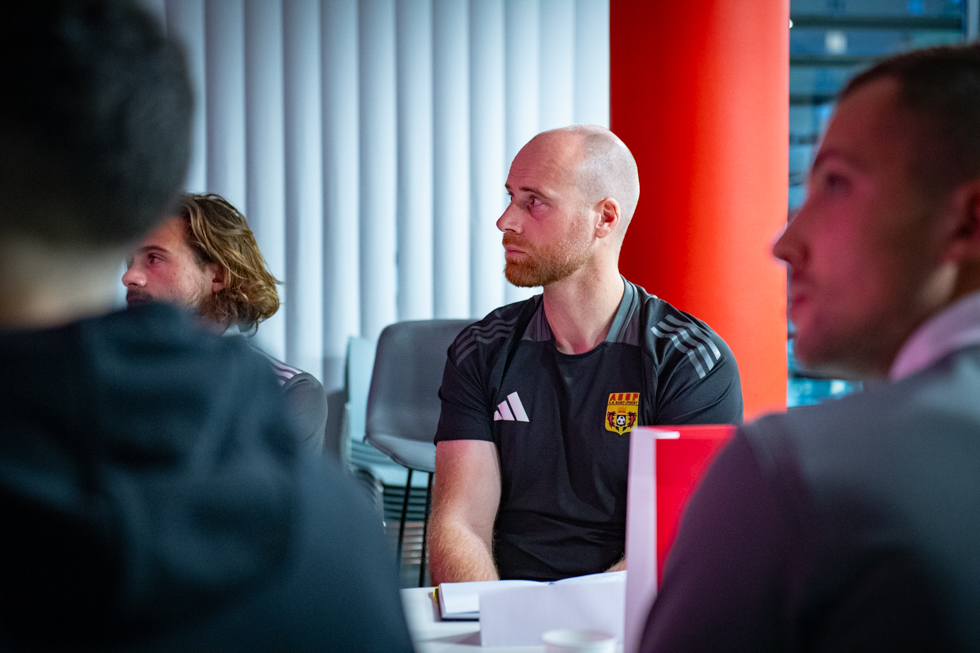
Yet these differences fuel reflection. The goal is not to copy, but to adapt. “We try to work towards what they do. It isn’t always possible, but we try to adapt as best we can to help our players progress,” the Versailles director summed up.
Exchange at the core
The seminars are built on reciprocal learning and will be repeated throughout the season. “We gain a great deal of experience regarding how the elite level operates and the objectives to reach in order to professionalise,” Alexis Faivre explained. “And in return, they gain a better understanding of the amateur world and of the players’ daily lives before they join these major setups.”
For Mathieu Merle, the partnership represents far more than visibility: “It’s a source of great pride. AS Monaco is a club that reflects our values and image.” The choice is no coincidence. Linking the royal town of Versailles and the Principality of Monaco, the partnership came about naturally.
A strategic network
The initiative fits into a broader strategy. Through its ÜNSEME programme, AS Monaco already works with clubs nearest the Principality. But these new agreements extend its reach to three major hubs of French football: Paris (Versailles), Lyon (Saint-Priest) and Marseille (Aix-en-Provence). “They’re three major population centres, so major recruitment and scouting pools,” notes Sébastien Muet.
Even so, ASM prioritises quality over quantity: “Some Ligue 1 clubs have 26 or 27 partnerships. That’s not our approach. We focus on quality, maintaining close ties, and being readily available.”
The collaborations also offer concrete opportunities, notably giving AS Monaco priority access to emerging talent from its partner clubs. Indeed, in the coming seasons, ASM is aiming for 20% of the first team’s playing time to be taken up by players trained at the Academy.