




2025-2026 judicial year: increased litigation, creation of a reserve, rule of law
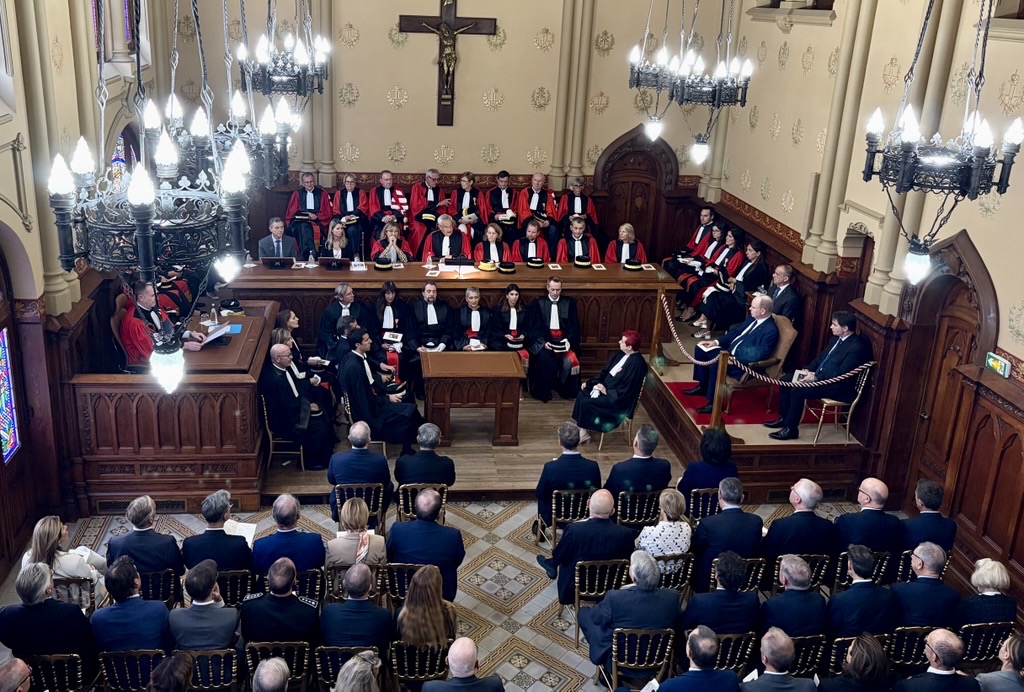
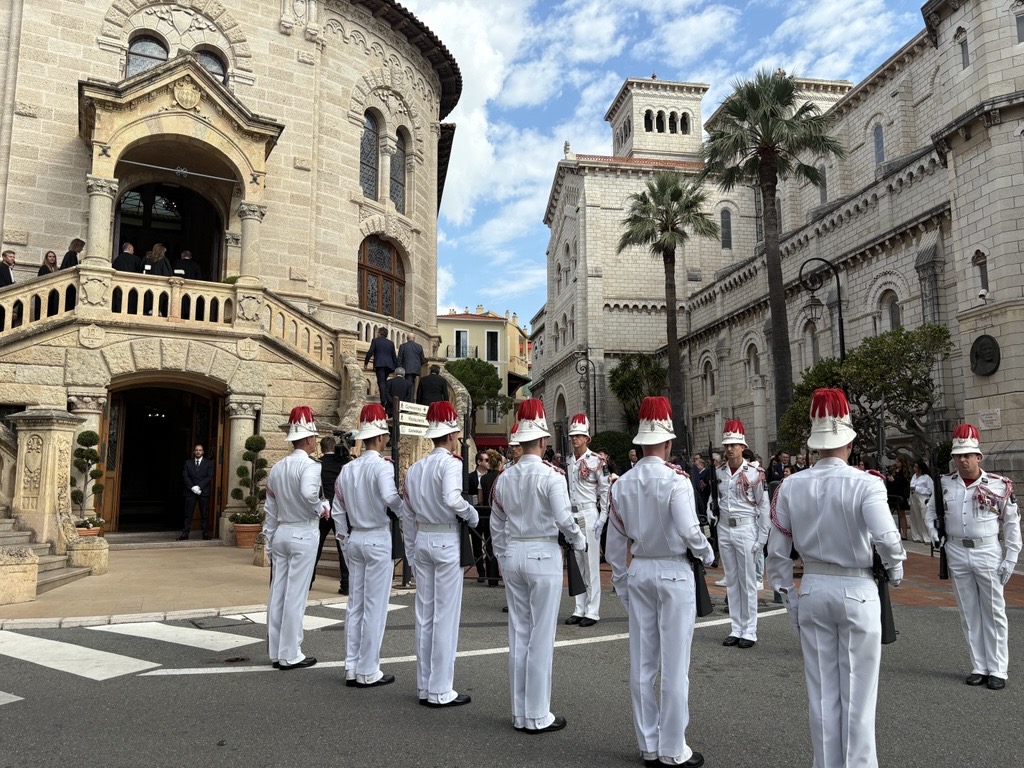
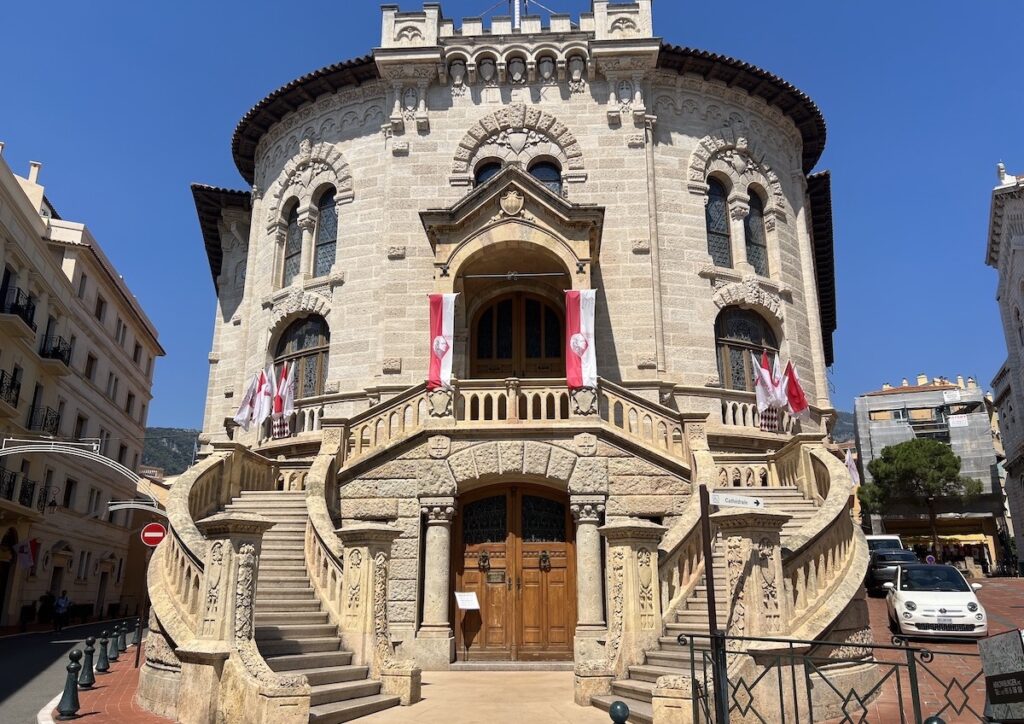
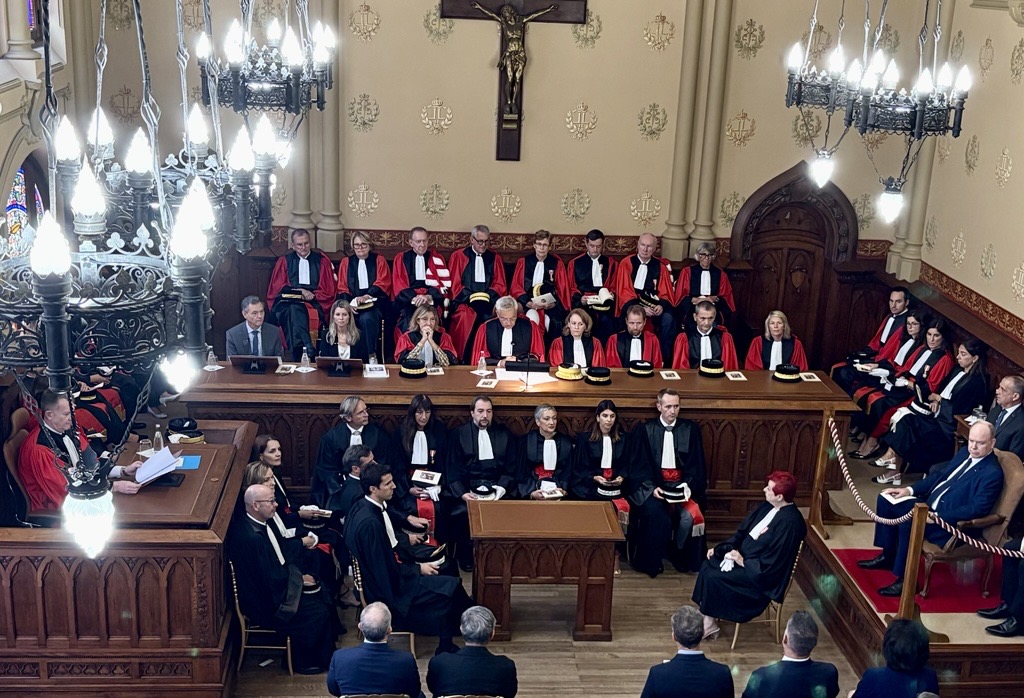
The ceremonial opening of the new session of the Courts and Tribunals took place on 1 October at the Palais de Justice in Monaco, preceded by the Mass of the Holy Spirit in the Cathedral © Monaco Tribune
On Wednesday 1st October, the new session of the Courts and Tribunals opened at the Palais de Justice, with Prince Albert II in attendance. The ceremony featured an annual report noting a sharp rise in activity and a speech on the rule of law.
The day began at 9.45 am with the traditional Mass of the Holy Spirit in Monaco Cathedral, ahead of the formal hearing at 11am in the Court of Appeal courtroom. Chaired by Francis Jullemier-Millasseau, First President of the Court of Appeal and Stéphane Thibault, Attorney General, the ceremony was attended by Prince Albert II, Christophe Mirmand, Minister of State, Thomas Brezzo, National Council President and several members of the Prince’s Government.
Delphine Lanzara, special advisor in the Judicial Services Department, and Professor Yves Strickler, Scientific Director of the Institut Monegasque de Formation aux Professions Judiciaires (Monegasque Institute for Training in the Judicial Professions), opened the presentations with an address on the theme of “The IMFPJ, at the service of law in motion,” highlighting the importance of ongoing training for legal professionals in a constantly changing legal environment. “The hopes placed in this Institute are legitimate and important, because fundamentally, training means passing on knowledge,” said Yves Strickler.
Significant growth in judicial activity
In his speech, Francis Jullemier-Millasseau gave a quantitative overview of the Monegasque courts’ activity over the past year, indicating in particular a high level of litigation concerning requests for the release of funds seized by investigating judges in economic and financial cases, and in particular in money laundering cases.
At the Court of Appeal, civil cases rose by 10%, with 135 rulings handed down compared with 123 the previous year. In criminal matters, the situation remains stable with 44 correctional rulings and two criminal rulings. The most spectacular increase was in the Council Chamber, with 181 rulings handed down, an increase of almost 35% on the previous year.
There was a similar trend at the Court of First Instance: 526 civil cases were completed, compared with 482 the previous year, and 409 criminal verdicts were handed down, compared with 392. The three investigating offices more than doubled their activity, with 96 cases completed compared to 46 the previous year, an increase of over 100%. Francis Jullemier-Millasseau was also pleased that the Court of Appeal was maintaining what he described as “reasonable” processing times for these cases: around four months between the appeal and the hearing date for criminal appeals, the Council Chamber and the Civil Chamber: “There is no backlog in the Council Chamber and the Criminal Appeals Chamber,” he explained, with the exception of 200 “rolling” civil cases pending at the pre-trial stage. However, the First President warned: “Should this growth trajectory, which is due to an increase in new cases, continue, it will be necessary to increase staffing levels.” After mentioning each jurisdiction, the First President of the Court of Appeal observed, in general terms, for each of them, “an increase in the number of cases dealt with in the 2024-2025 session.”
Justice and the rule of law
Francis Jullemier-Millasseau’s address focused on the fundamental role of justice in the rule of law. Quoting Montesquieu in his 1748 L’Esprit des lois, he said that “the independence of the judiciary is an essential element of the rule of law” and that “Monaco’s magistrates judge impartially, without prejudice and freely. Justice plays an essential social role in a society, balancing passions, interests and powers, righting wrongs, damages and injuries, and sanctions shortcomings, faults and offences,” he declared, stressing that judges act “free from any influence or pressure, without having to fear punishment or hope for personal gain.”
Among the highlights of the speech, the First President of the Court of Appeal also mentioned the modernisation of the resources available to the judiciary. He welcomed the introduction by the Judicial Services Department of subscriptions to Lexis Nexis 360 Intelligence, a particularly powerful search engine that “facilitates our research and helps us to draft rulings.”

Finally, he spoke of artificial intelligence as a tool that is “revolutionising our working environment.” However, he pointed out that “it is not there to replace us, but to assist us in our decisions.”
The creation of a judicial reserve
One of the major announcements concerns the creation of a judicial reserve, an initiative of the Secretary of State for Justice. Comprising experienced honorary magistrates, some of whom are already reservists in France, the reserve is intended to provide “valuable and essential reinforcements” for the Court of First Instance, which is currently understaffed, and for the Court of Appeal, which will only have six magistrates compared with seven last year. Drawing on France’s experience with local judges who have become magistrates on a temporary basis, Francis Jullemier-Millasseau said he was “certain that the creation of this judicial reserve will find its place in Monaco as it has in France.”
The First President of the Court of Appeal concluded by thanking all those involved in the Monegasque justice system: judges, civil servants, lawyers from the Monaco Bar for “the quality of their written and oral submissions,” bailiffs and agents. “These thanks are a reminder that justice is a collective effort, with each individual an essential cog in the wheel.”
The Attorney General, Stéphane Thibault, also took the floor to give his assessment of the past year. The ceremony ended with a cocktail reception on the terrace of the Conseil d’Etat building for all the participants.