





Netflix releases documentary on mysterious death of banker Edmond Safra in Monaco
© All rights reserved
Netflix has announced the release of Murder in Monaco on 17 December, a documentary directed by Hodges Usry that delves back into one of the most high-profile criminal cases in the Principality’s history.
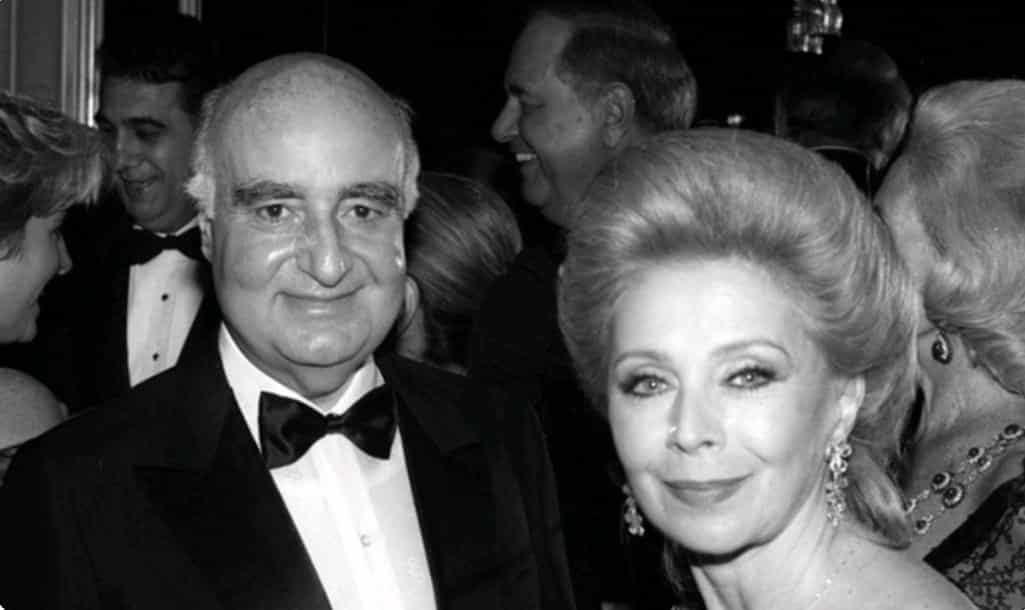
On 3 December 1999, Edmond Safra, the billionaire banker of Syrian origin, died from asphyxiation in the fire that engulfed his apartment at the top of the “La Belle Époque” building on Avenue d’Ostende. Nurse Vivian Torrente also lost her life in the tragedy. The financier, then 67 and weakened by Parkinson’s disease, had sold his banking empire a few months earlier — including the Republic National Bank of New York — to HSBC for $10.3 billion. The unexpected deal, concluded with an unusual discount, raised numerous questions in international financial circles and fuelled family tensions surrounding the inheritance.
A tragedy in the making
The investigation quickly identified Ted Maher, an American nurse recently hired to care for the banker, as responsible for the tragedy. A former special forces soldier who had retrained as a neonatal nurse, Maher had been working for Safra for only a few months, earning a particularly generous salary.
According to the version of events established in court, Ted Maher is said to have started a fire in a wastepaper basket placed beneath a smoke detector and staged an assault in order to appear as a hero in the eyes of his employer. He inflicted knife wounds to his own abdomen and thigh to support his claim that he had been attacked by two masked individuals. The nurse is alleged to have acted out of jealousy towards other members of the medical team and out of fear of losing his lucrative job.


Informed of the supposed assault, Edmond Safra took refuge with Vivian Torrente in a secure room of his apartment. The fire spread far beyond what Ted Maher had anticipated. Alerted at around 5 am, the emergency services took several hours to reach the victims, partly because Maher’s false statements about armed intruders had directed the operation towards searching for non-existent assailants. Safra and Torrente died from asphyxiation, overcome by toxic fumes.

Confession, trial and controversy
Ted Maher confessed three days after the events, on 7 December 1999, bringing an end to an intense period of speculation in which a wide range of theories about the perpetrators circulated, from the Russian mafia to Palestinian terrorists. The nurse was tried in November 2002 before Monaco’s Criminal Court and sentenced to ten years in prison for arson causing death. The trial, described as the “trial of the century” by the regional press, drew worldwide media attention.
The case nevertheless left several unanswered questions that continue to fuel debate. Why did it take the emergency services so long to reach the victims in the Principality, which is renowned for its efficiency? Certain elements in the case have never been fully clarified. After serving his sentence, Ted Maher retracted his confession, claiming he had been coerced — a version disputed by the Monegasque authorities.
Despite the conviction, the case continues to fuel alternative theories. Possible links with the Russian mafia have been raised, as Safra had alerted the American and Swiss authorities, as well as the FBI, in 1998 to suspicious fund movements involving IMF money and Russian officials. The banker had also co-founded Hermitage Capital Management in 1996 with Bill Browder and Beny Steinmetz, an investment fund that became a major player in Russia and was later at the centre of the Sergei Magnitsky affair.
The recently released trailer for the Netflix documentary promises to explore these different angles and to give a voice to several witnesses, including Lady Colin Campbell. The film is in keeping with the true crime productions that have become a growing success on the streaming platform. Twenty-five years after the events, its release will rekindle interest in a case that has never ceased to fascinate and fuel discussion.