



Prince Albert II hosts Portuguese President Marcelo Rebelo de Sousa for historic visit
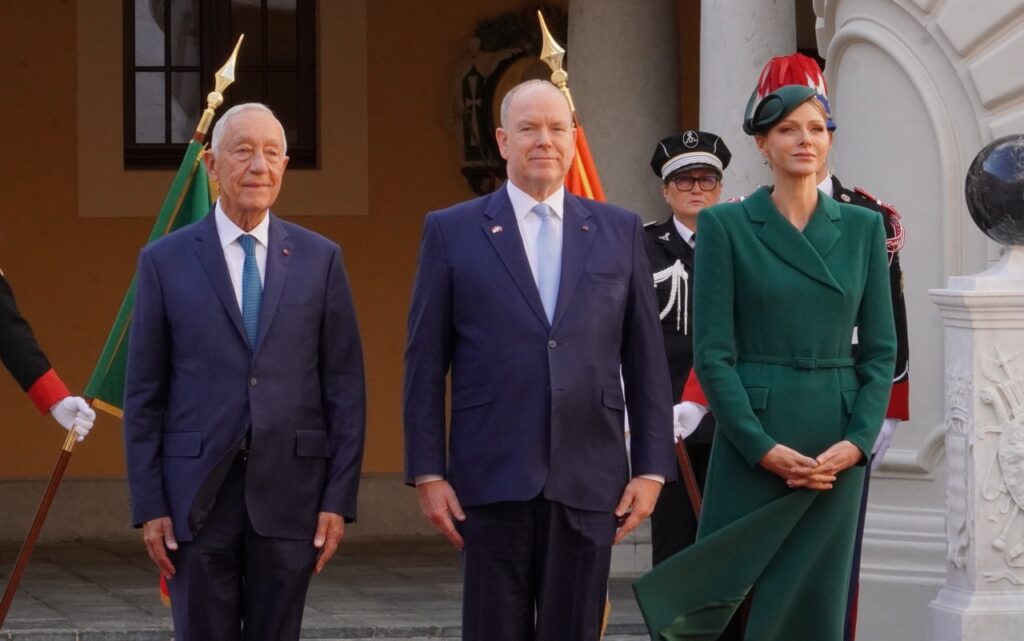
President of Portugal Marcelo Rebelo de Sousa travelled to Monaco for an official visit on Friday 21 November © Benjamin Godart – Monaco Tribune
President Marcelo Rebelo de Sousa’s visit marks the start of strengthened cooperation between the two States, more than a century after ties were forged by two oceanographer sovereigns.
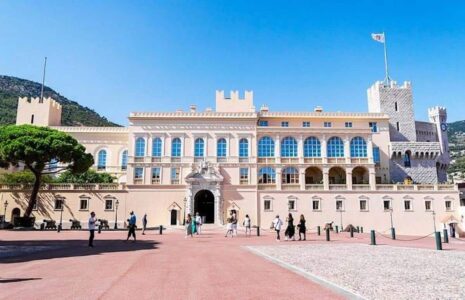
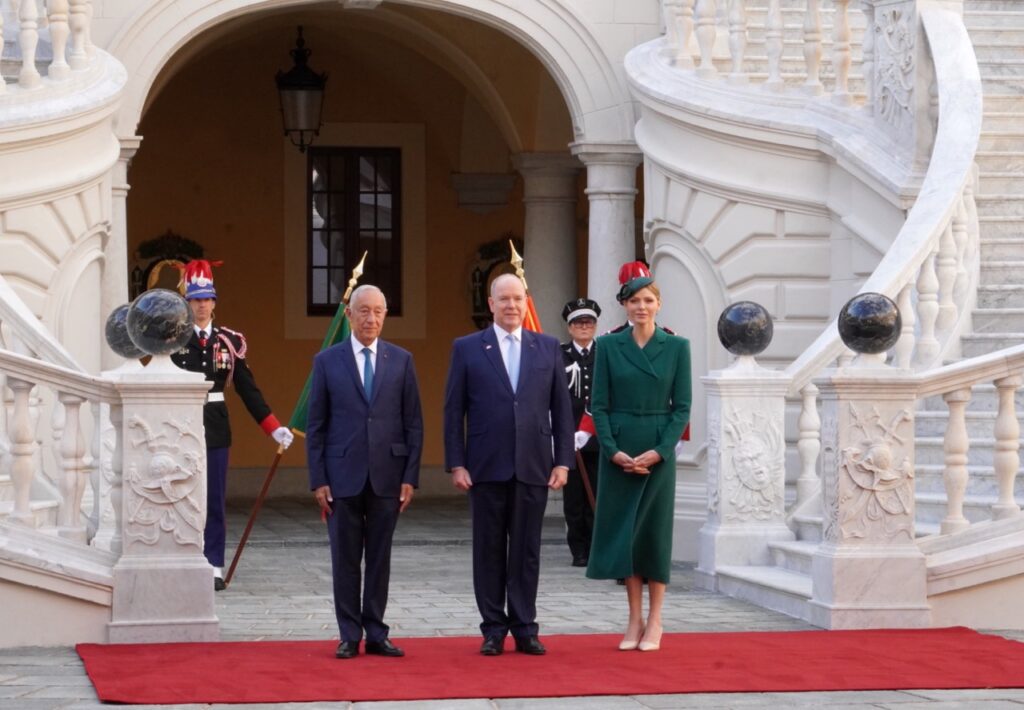
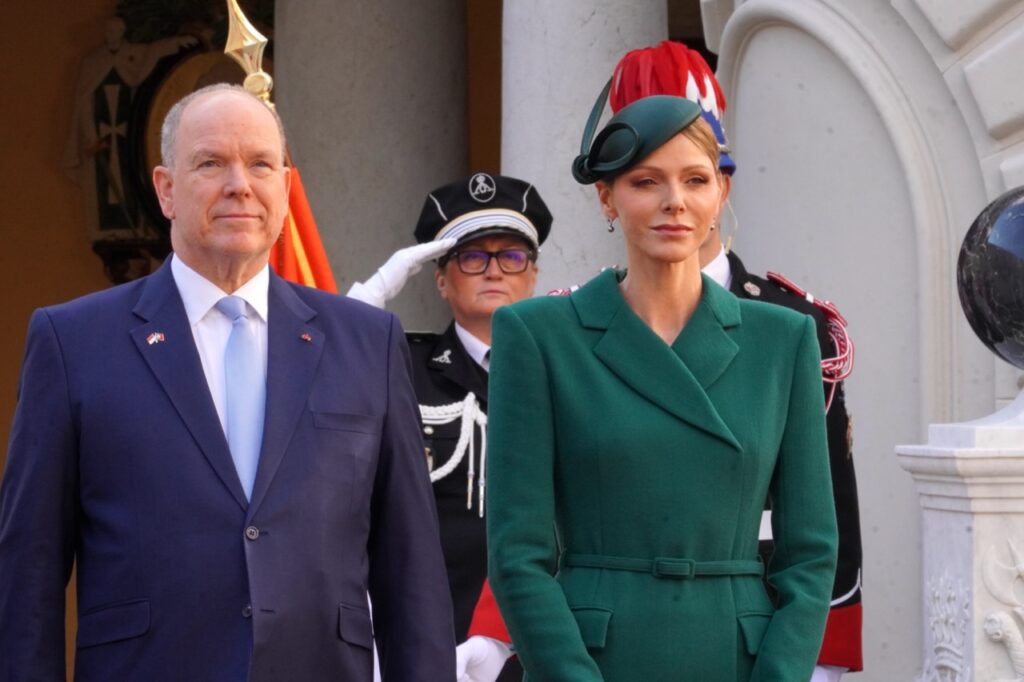
On Friday, the Prince’s Carabinieri stood motionless under a clear morning sky in the Cour d’Honneur of the Prince’s Palace. Despite the November chill, the atmosphere was celebratory as they welcomed Marcelo Rebelo de Sousa, President of the Portuguese Republic, who arrived with his delegation to make history: never before had a Portuguese head of state carried out an official visit to the Principality.


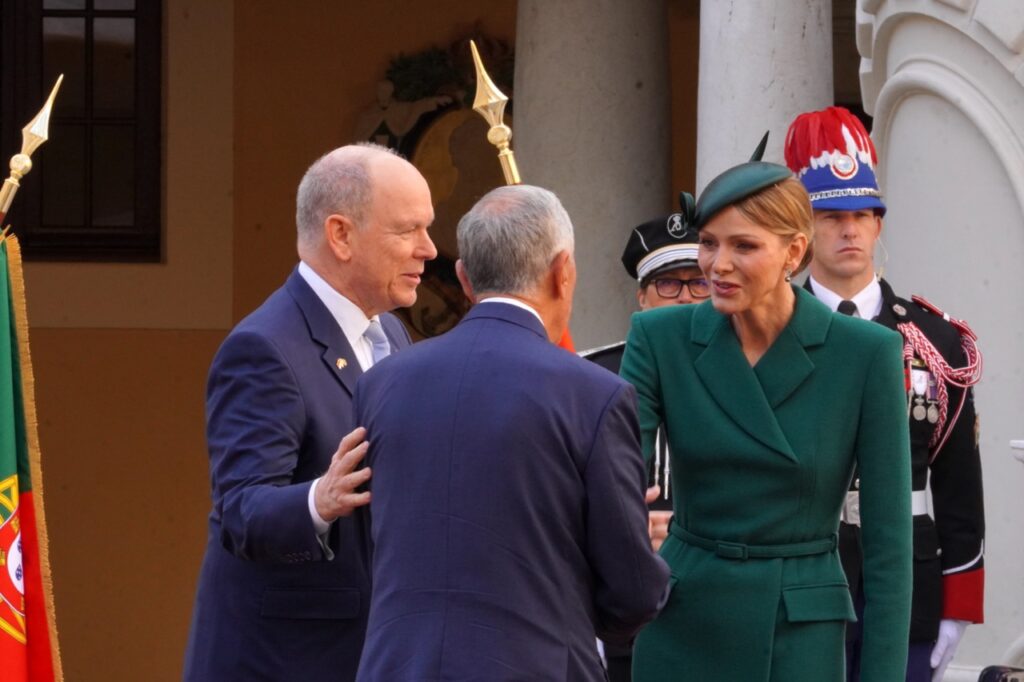
At precisely 10.15 am, Prince Albert II and Princess Charlene welcomed their guest at the foot of the Palace steps. The national anthems rang out under the direction of Colonel Tony Varo, Superior Commander of the Public Force, before the two heads of state reviewed the military detachment. The high-level meeting crowns eighteen years of strengthening bilateral ties since the establishment of diplomatic relations in 2007. “For the Portuguese community, it is an immense source of pride that the president is visiting Monaco. His visit shows that our presence is truly recognised,” Pedro, a 25-year-old Portuguese resident in Beausoleil, said.
Decorations exchanged and framework agreement signed
The day was marked by several key moments. After the bilateral meeting in the Salon de Famille, the two sovereigns exchanged decorations in the Salon des Glaces. Prince Albert II promoted Marcelo Rebelo de Sousa to the rank of Grand Cross in the Order of Saint-Charles, while the Portuguese president presented the Princely Couple with the Grand Collar and the Grand Cross of the Order of Christ. Far from symbolic gestures, these distinctions represent mutual recognition between two States united by their commitment to ocean preservation.
The official luncheon preceded the signing of a cooperation framework agreement, negotiated since 2018. Signed in the presence of Isabelle Berro-Amadéï, Government–Counsellor-Minister of Foreign Affairs, and Inês Domingos, Portuguese Secretary of State for European Affairs, the text outlines exchanges in areas as varied as culture, education and marine conservation.
A tribute to the pioneers of oceanography
In the afternoon, the delegations travelled to the Saint-Martin Gardens, where a photographic exhibition titled “Souverain Océanographe/Sovereign Oceanographer” lines the railings. Twenty-three images retrace the scientific legacy of Albert I, presented alternately by Thomas Fouilleron, Director of the Archives and Library of the Palace, and Vincent Vatrican, Director of Monaco’s Audiovisual Institute.
At the heart of the gardens, a bust of King Dom Carlos I was unveiled before the president and the Portuguese delegation. Pupils from Lycée Albert Ier then read a dialogue between the Portuguese king and the Monegasque Prince Albert I, recounting their scientific collaboration. The symbolic gesture preceded a wreath-laying ceremony at the foot of the statue of Albert I, sealing in bronze and marble a century-old friendship. “My visit to your country in 2022, to mark the centenary of Prince Albert I, remains an especially vivid memory, as your hospitality was exceptional,” Prince Albert II said in his speech.
The legacy of oceanographer sovereigns
“Even though I left Monaco several years ago, the Portuguese president’s visit is an event I’m following closely. I grew up here, and I know there is a historic friendship between Monaco and Portugal, particularly through the scientific and diplomatic ties developed in the past,” Luis, a Porto resident who lived in Beausoleil until the age of 18, said.
Beyond the ceremonial aspects, the visit carries powerful symbolic weight, which was also reflected in the emotion and support expressed by Prince Albert to President Rebelo de Sousa during the wildfires last August. The friendship is rooted in a shared history dating back to the late 19th century, when consular relations were established in 1871. But above all, the mutual passion for oceanography shared by Prince Albert I and King Dom Carlos I forms the foundation of the relationship between the two nations. Both scientists and seafarers, they forged ties at the turn of the 20th century that went beyond the diplomatic framework.
The visit concluded at the Oceanographic Museum, an institution founded by Albert I in 1910. Robert Calcagno, Director General of the Oceanographic Institute, guided the two heads of state through the exhibition “Mediterranean 2050”, an immersive journey into the future of the fragile sea. “Your presence reminds us that what profoundly links Monaco and Portugal today is the ocean. A living, fragile and essential space that shapes our identities, inspires our economies and guides our international commitments,” the Monegasque Sovereign emphasised. The signing of a memorandum of understanding between the Académie de la Mer and Portugal’s Atlantic Center brought the day—dedicated to science and diplomacy—to a close.
A well-established Portuguese community
“The head of state spent his evening, punctuated by traditional songs, with the region’s Portuguese community. He took the time to speak with people at length, happily posing for selfies with those who had come to meet him,” Julien Vivaudo, audiovisual manager at the Oceanographic Museum and celebration attendee, said.
The Portuguese community represents a significant presence in Monaco, with 418 residents and nearly 4,300 employees (according to 2024 official figures), most of whom commute daily from neighbouring France. The figures demonstrate a relationship that goes far beyond the institutional framework, rooted firmly in the social and economic fabric of the Principality.