







Abortion in Monaco: Government shelves bill despite opposition from the National Council
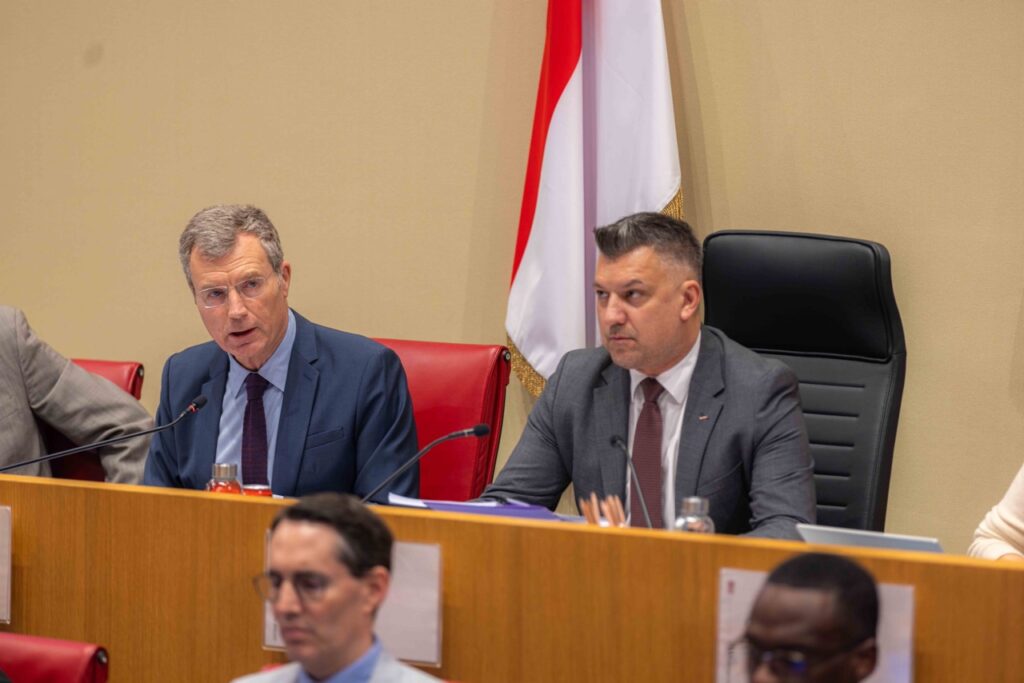
The Minister of State speaking at the National Council’s public session on 26 November © Conseil National
On Wednesday 26 November, during a public session at the National Council, the Minister of State confirmed the decision to rule out legalising abortion in the Principality.
Addressing elected officials gathered in the public session, the Minister of State detailed the reasons behind the Princely Government’s decision — by 19 votes to 2 — not to convert the proposal adopted on 15 May into a government bill. In line with the explanations given by Prince Albert II, who told Monaco Matin that he understood “the sensitivity of this subject” and “the emotion it can bring up”, Christophe Mirmand set out the main argument, based on Article 9 of the Constitution, which establishes Catholicism as the State religion.
The Senior Committee for Legal Studies (Comité Supérieur d’Études Juridiques), which was consulted on the matter, concluded that the proposed bill would have amounted to recognising an actual right to abortion, incompatible with Monegasque constitutional principles. “Only termination of pregnancy requested on grounds linked to preserving the woman’s physical, psychological and mental health could constitute a justifying circumstance under Article 248 of the Penal Code” the Minister of State noted, before recalling that four Council of Europe member states – Poland, Malta, Andorra and Liechtenstein – have legislation on abortion more restrictive than Monaco’s.
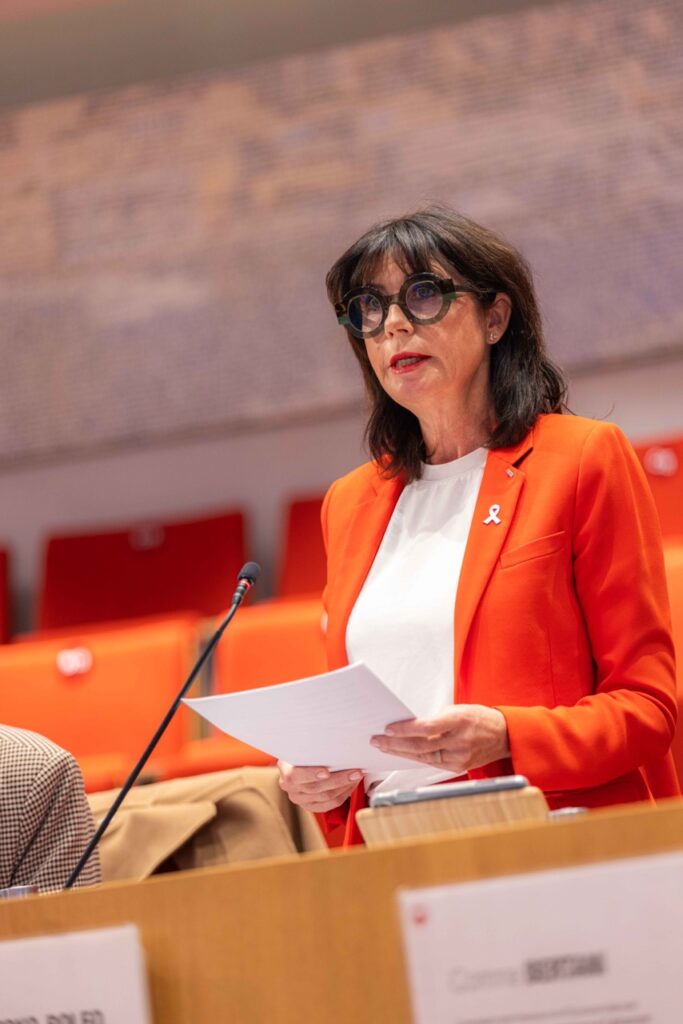
Thomas Brezzo defends National Council’s action
The President of the National Council did not hide his disappointment. “I regret that in a country we want to be modern, we look backwards rather than allow ourselves to have a forward-looking vision,” he said. He then recalled that Catholic identity “has never served to prevent legal progress when society demanded it,” citing previous developments on contraception and the partial decriminalisation of 2019.
Compensatory measures announced
In response, the Government promises a sexual health roadmap: information and education relating to sexuality and maternity, including anonymous and free gynaecological consultations for young women up to the age of 21.
“I welcome the fact that our initial approach has nevertheless enabled some progress, even if I am obliged to qualify it as minor. Above all, I regret that it does not address the fundamental point: the right for women to have control over their own bodies in their country,” Thomas Brezzo lamented, before concluding his remarks on a note of hope: “If we have not succeeded today, let us not doubt that others will take up the torch.”
It’s a stance that reflects a desire for ongoing discussion and progress in the Principality — a position shared by Christophe Mirmand in his dialogue with the National Council.