

From Poussin to today: Monaco’s “The Feeling of Nature” explores art across centuries
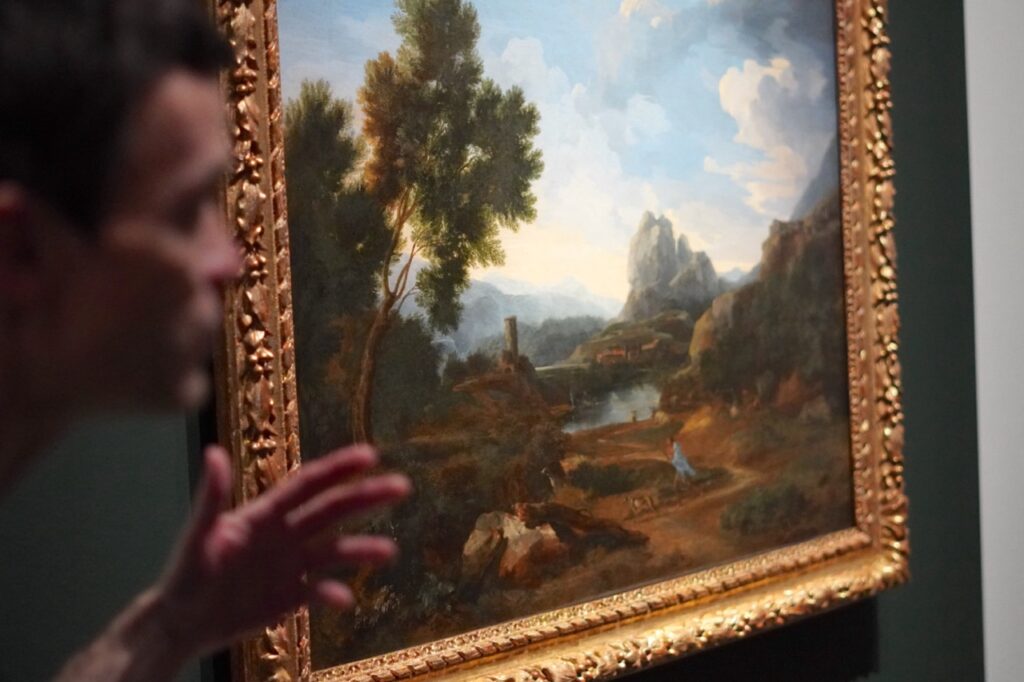
Guillaume de Sardes explains Nicolas Poussin's influence on the idealisation of nature to his student Gaspard Dughet © Benjamin Godart / Landscape with Hunters - Musée du Grand Siècle
The Nouveau Musée National de Monaco (NMNM) is inaugurating an ambitious exhibition that brings together nearly forty artists around the lyricism of nature, from the 17th century to the present day. Monaco Tribune brings you seven anecdotes, recounted by Guillaume de Sardes, the exhibition’s curator.
From 13 February to 25 May 2026, the Villa Paloma is hosting an exhibition designed to be both a sensory and historical experience. Curated by art historian Guillaume de Sardes, five paintings by Nicolas Poussin resonate with contemporary works (sculptures, installations, photographs, videos, drawings and paintings) across six thematic sections: storms and nights, forests and gardens, seascapes and waterfalls, deserts and volcanoes, hills and mountains, flowers and butterflies. ‘It’s an exhibition that mixes genres, disciplines and eras. A way of putting art into perspective,’ sums up Björn Dahlström, director general of the NMNM. For Guillaume de Sardes, the founding intuition is clear: ‘According to Pierre Rosenberg, Poussin was the first painter to focus not on landscape, but on nature itself.’ Guided tour.
Seven anecdotes about the works and their artists
1. Poussin’s The Storm, restored and revealed as never before
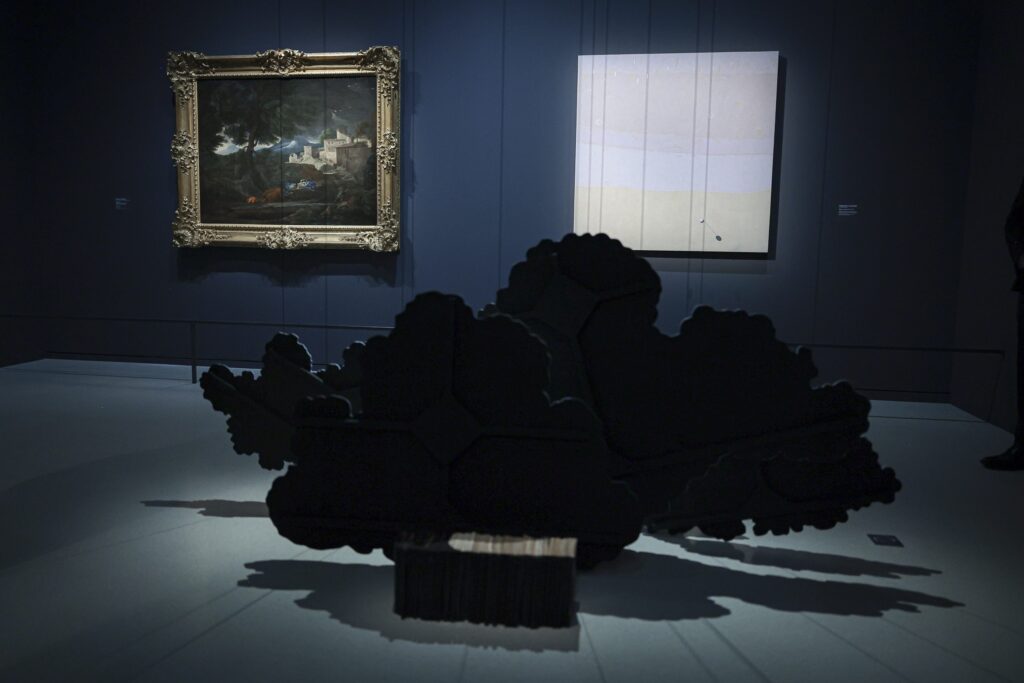
The starting point for the entire exhibition, The Storm (1651), on loan from the Musée de Rouen, has undergone restoration co-financed equally by the museums of Rouen and Monaco. The result is striking. ‘Many of Poussin’s paintings have lost their lustre, with unwanted transparency effects. You will discover this restored masterpiece by Poussin, bright and colourful, as it has never been seen before,’ says Guillaume de Sardes. In this painting, the raging elements reduce men to ‘poor frightened creatures suffering the fury of nature,’ a major break with 17th-century painting.
2. Gaspard Dughet, the pupil known as ‘Gaspard Poussin’
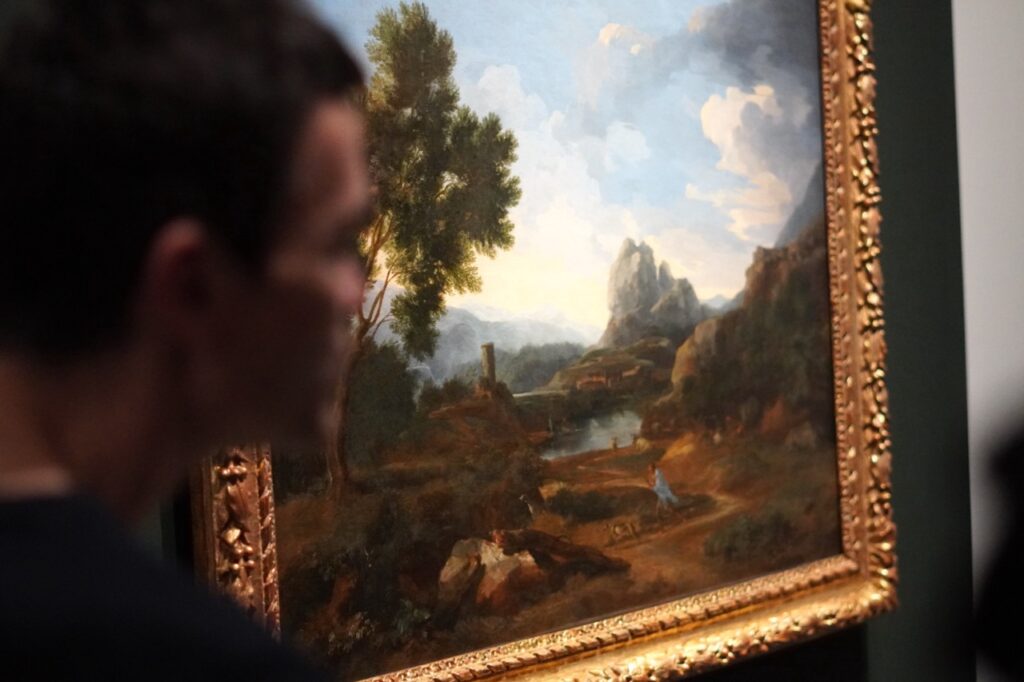
A great lover of hunting and the forest, it was he who encouraged his ageing master to leave the studio. ‘He would take him by the arm and take him for a walk,’ says the curator. Although his painted landscapes are bathed in a ‘totally Poussin-esque’ light, Guillaume de Sardes believes that they do not reach the level of genius of Nicolas Poussin.
3. Thomas Demand’s paper jungle, enlarged for the occasion
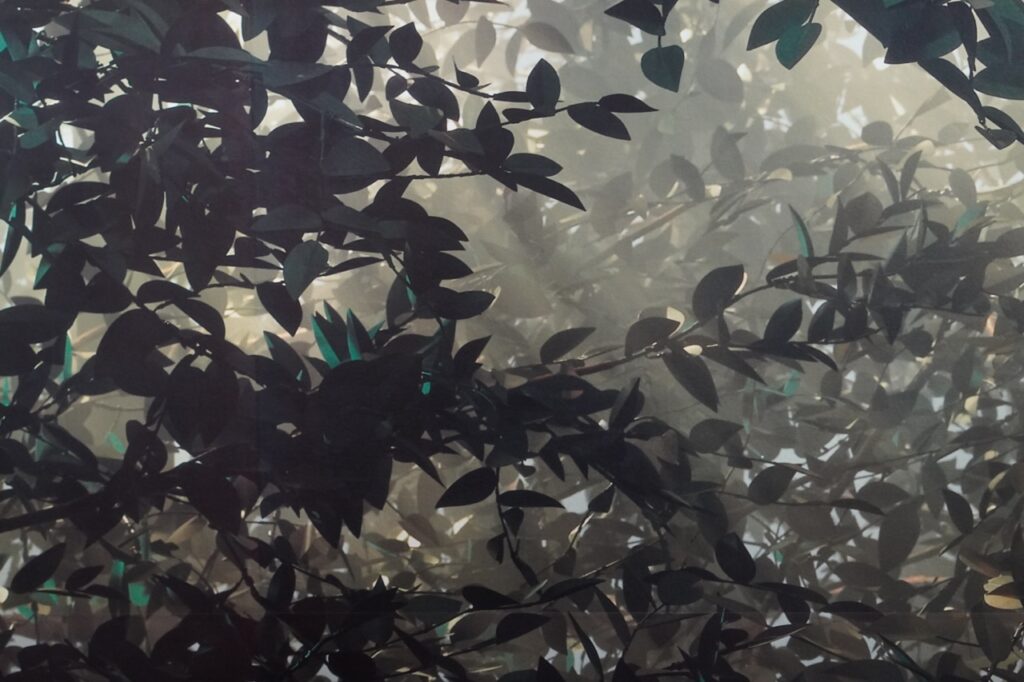
German artist Thomas Demand, known for his reconstructions of real places made entirely of paper, is represented with a monumental jungle. For the Monaco exhibition, ‘the photo of the paper model has been enlarged to twice its original size in the form of wallpaper, in order to accentuate the impression of immersion,’ says the curator about the construction of the exhibition.
4. Blind Orion, filmed in Super 8 by Anne-Laure Sacriste
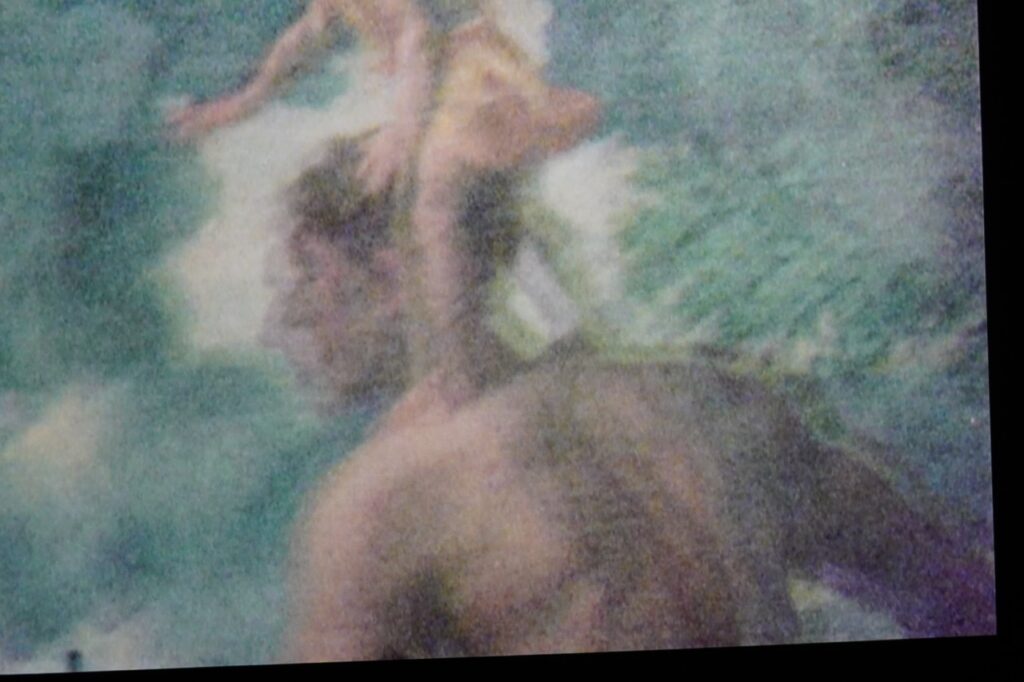
Unable to obtain a loan of Blind Orion Seeking the Sun, a painting that Guillaume de Sardes describes as his favourite, the exhibition presents the work of artist Anne-Laure Sacriste, who filmed the work at the Metropolitan Museum in New York with a Super 8 camera. ‘There is a whole intellectual interplay between the lack of sharpness of Super 8 and the painting itself, since Orion is a giant blinded by a god,’ says the curator with a smile. Poussin signifies this blindness by painting a cloud in front of the giant’s eyes, a poetic technique that particularly fascinated the Surrealists.
5. Walter Robinson and America in the third degree
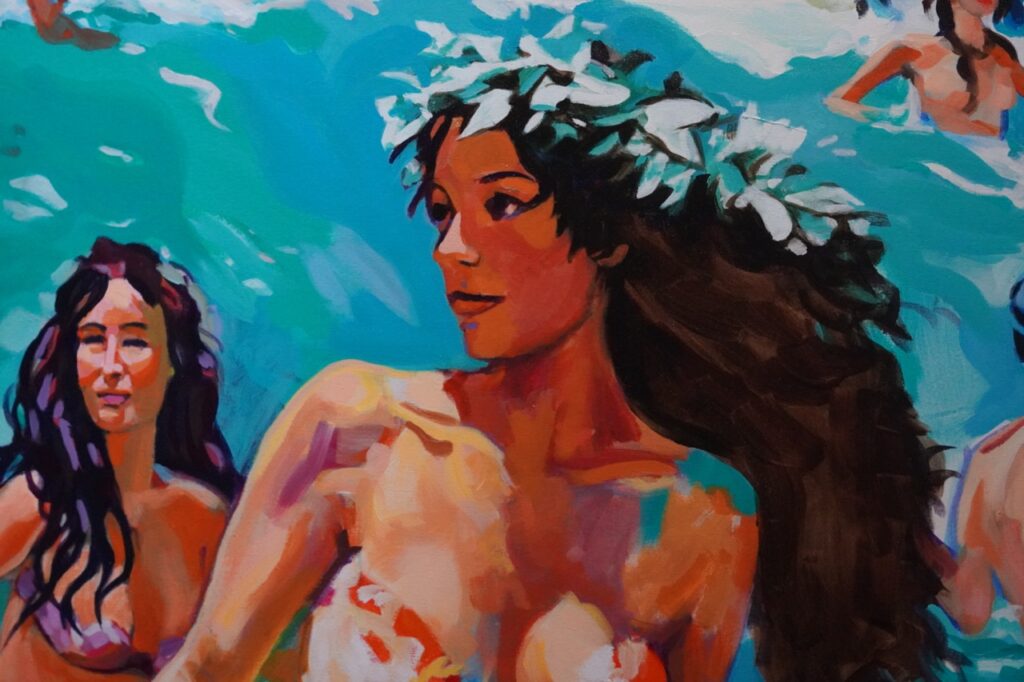
In this exhibition, American painter Walter Robinson adds a touch of irony with his work Hawaii, depicting bathers in the tumultuous waves. ‘A stark contrast to the calm and contemplative waters depicted by Poussin,’ explains Guillaume de Sardes. Throughout his career, this artist has worked on the mythical iconography of the United States, playing with kitsch — crime novel covers, erotic imagery from the 1950s and 60s.”
6. Christo, the artist duo who self-finance their monumental works
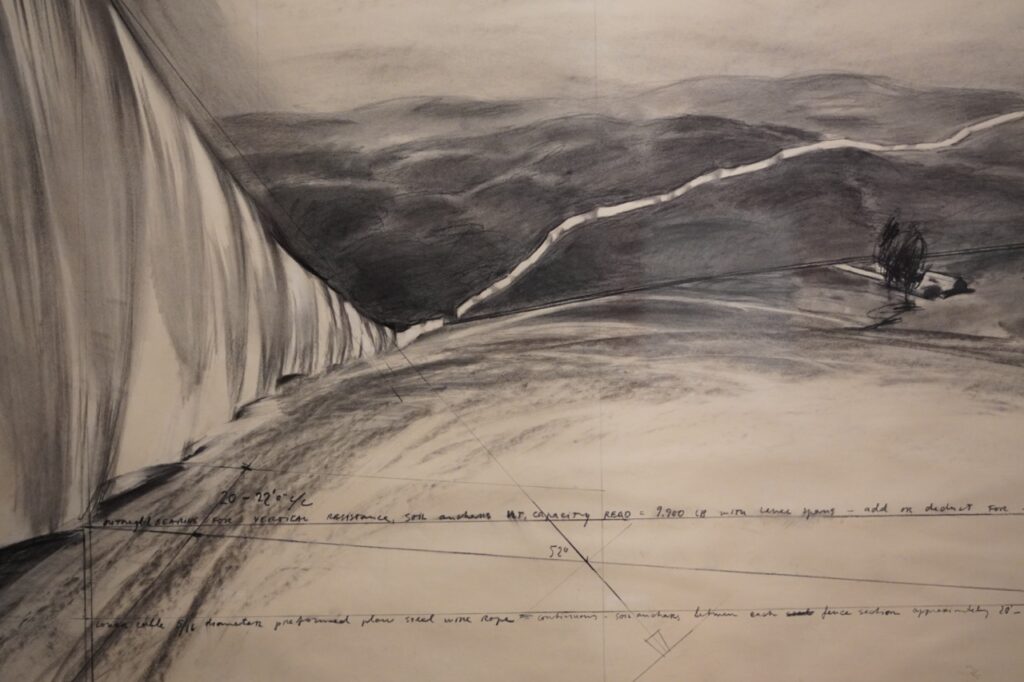
The ephemeral installations of Christo and Jeanne-Claude, which appropriate the landscape for a moment in time, naturally find their place in this celebration of nature. Guillaume de Sardes emphasises the uniqueness of this approach: “Unlike many artists, Christo produces everything himself. He never seeks funding from museums or private individuals. He makes preparatory drawings, and once he has managed to raise enough money, he pays for the installation, assembly and dismantling himself. ‘ The curator sees this as a rare ’elegance” in the world of contemporary art.
7. Hannibal Crossing the Alps, a Poussin rediscovered for Monaco
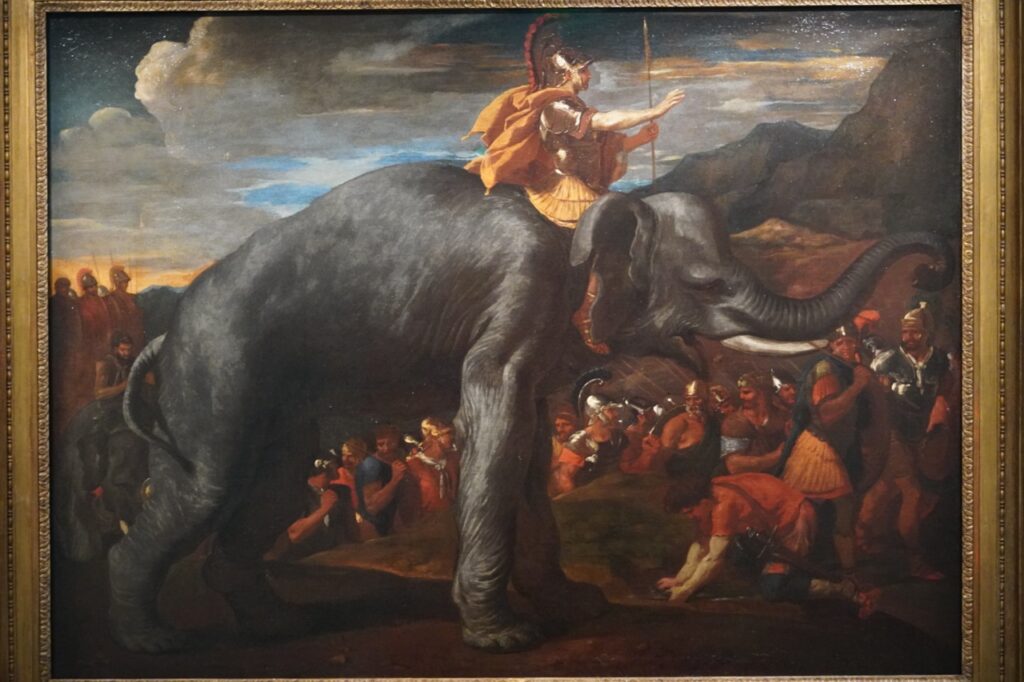
The final centrepiece is Hannibal Crossing the Alps, a painting by Poussin recently rediscovered by art historian Pierre Rosenberg and acquired by the Prince’s Palace of Monaco. The work is dominated by a monumental elephant and is part of a subtle interplay of formal correspondences: ‘The elephant’s back is reminiscent of the stone in Sarah Moon’s photograph, which in turn inspired Suzanne Husky’s tapestry, etc.,’ explains the curator as he walks around the room. It is a perfect illustration of how the exhibition weaves links between works and eras.
‘Le Sentiment de la Nature. Contemporary art in the mirror of Poussin’, from 13 February to 25 May 2026, Villa Paloma, 56 boulevard du Jardin Exotique, Monaco.