



“A hotel is, above all, a human adventure”: Michael Calixte, the architect of Fairmont in Morocco
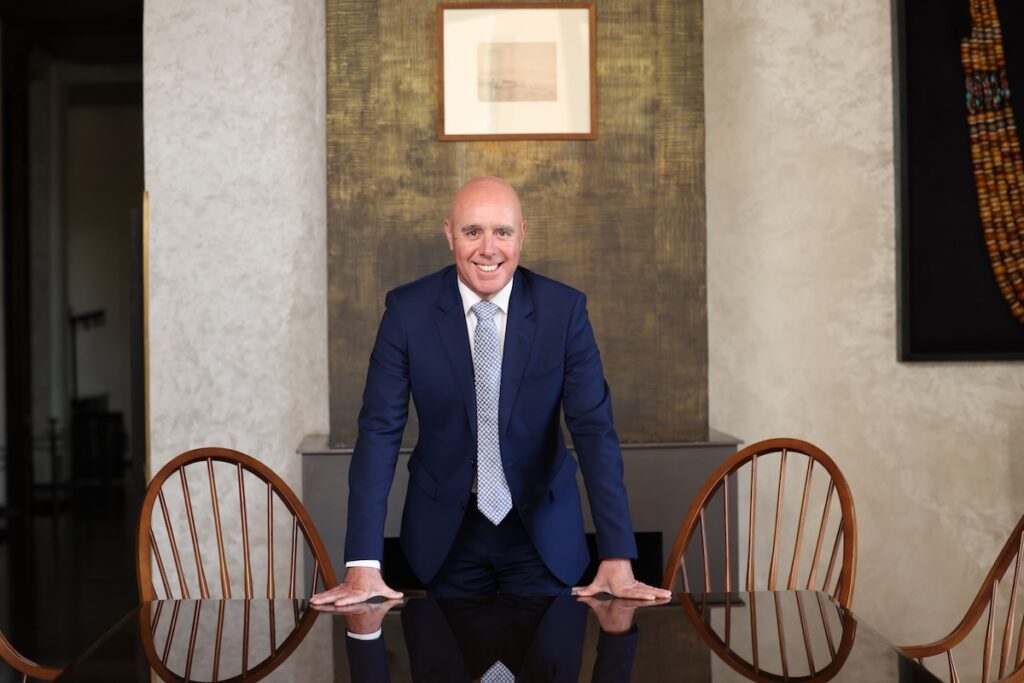
Michael Calixte, Regional Vice-President, Fairmont Morocco, and General Manager, Fairmont Royal Palm Marrakech © Fairmont Royal Palm Marrakech
Michael Calixte, Regional Vice-President of Fairmont Morocco and General Manager of the Fairmont Royal Palm Marrakech, shares his vision of a luxury built on exchange, authenticity, and deep roots in a country on the cusp of transformation.
Bordeaux, the Ardèche, Southampton, Dubai, Algiers – and now Marrakech. Michael Calixte’s trajectory resembles no other. Since his appointment in March 2025 at the helm of Fairmont Hotels & Resorts in Morocco, this veteran of the Accor group – four decades in the industry, thirteen countries traversed – has been orchestrating the development of four exceptional properties: the Royal Palm Marrakech, Taghazout Bay, La Marina Rabat-Salé and the Tazi Palace Tangier. A collection of addresses as diverse as they are coherent, united beneath a shared philosophy of care and singularity. Monaco Tribune put its questions to him.
MT: Your connection to hospitality goes back to childhood, in a family establishment in the Ardèche. Forty years later, you find yourself at the helm of four Fairmont properties in Morocco. How does a young man from Bordeaux become the architect of luxury hospitality in a country as singular as Morocco?
MC: My connection to hospitality is, above all, an emotional one. I grew up in a family environment where welcoming others was second nature — almost instinctive. It taught me very early on that this profession is built on attentiveness to others. My career then took me from Bordeaux out into the world, with one constant throughout: understanding cultures and forging connections. Morocco asserted itself as an obvious fit, through its human and cultural richness. Today, my role is to guide the development of Fairmont Hotels & Resorts in Morocco, reconciling international excellence with genuine local roots.


MT: Your Moroccan portfolio is of rare diversity: a golf resort in Marrakech, a historic palace in Tangier, a flagship seaside property at Taghazout Bay, an urban address in Rabat. What is your vision for making these four properties not simply a collection of fine hotels, but a true Fairmont ecosystem in Morocco?
MC: Our vision is built on synergy. Each of our properties – in Marrakech, Taghazout Bay, Rabat and Tangier – has a strong identity of its own. The challenge is to preserve that singularity while building a broader coherence. We are not seeking to standardise, but to create an ecosystem where every experience is distinct, while carrying the same promise: excellence, authenticity and emotional connection.
Between sky, argan and the Atlantic: Fairmont Taghazout Bay, where luxury drops anchor
MT: You have said that a hotel is, above all, a human adventure. In a sector where luxury sometimes retreats behind stone, marble and star ratings, how do you preserve that human dimension within a group of Fairmont’s global scale?
MC: Luxury today can no longer be purely material. It must be human. At Fairmont, we place great emphasis on the training, recognition and development of our teams. The goal is to create an environment where everyone can express themselves and engage fully. The real difference lies in the sincerity of interactions. That is what transforms a service into a memorable experience.
MT: The Fairmont Royal Palm Marrakech is the only true full-service resort in the city – 231 hectares, an 18-hole golf course designed by Cabell B. Robinson, a 3,500 m² spa, family facilities, tennis and padel. It is a proposition without equivalent in Marrakech. How do you intend to consolidate and amplify this position as the reference resort, particularly ahead of the 2030 World Cup, which will fundamentally reshape Moroccan tourism?
MC: The Fairmont Royal Palm Marrakech is already positioned as a destination in its own right. Our ambition is to reinforce that singularity. In a context where Morocco is set to experience a significant acceleration in tourism – particularly with the 2030 World Cup – we are working to enrich the overall experience across wellness, sport, gastronomy and family offerings. The goal is to present a resort that is complete, coherent and deeply rooted in its environment.
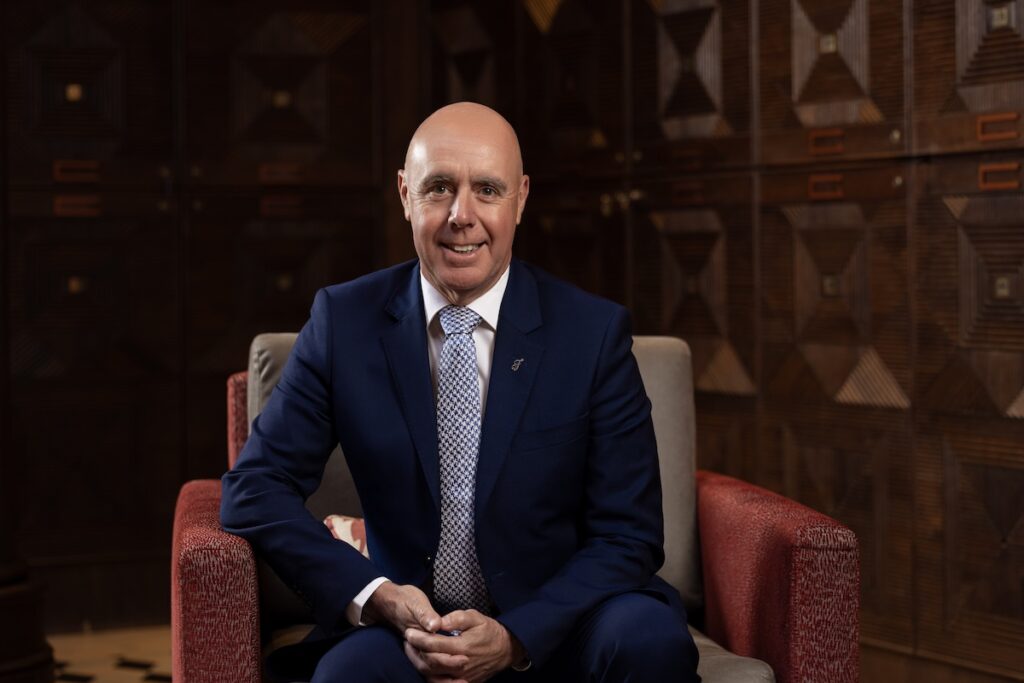
MT: You are yourself a passionate golfer. How does that change the way you think about the golf experience at the Royal Palm — beyond green fees, beyond the course itself?
MC: Being a golfer gives me a finer understanding of expectations. But today, the golf experience extends far beyond the course. It is about creating an ecosystem: quality of the terrain, of course, but also atmosphere, service, dining, wellbeing. Golf becomes one component of a broader experience, conceived down to the finest detail.
MT: Last year, the Royal Palm launched its first Fairmont Tennis Cup, with the presence of David Ferrer and Caroline Garcia, alongside the Fairmont Golf Cup with Porsche. This move towards a high-level sports resort seems deliberate. Is this the direction you wish to set: making the Royal Palm a place where elite sport meets the Moroccan art of living?
MC: Yes, it is a conscious choice. The development of events such as the Fairmont Tennis Cup and the Golf Cup forms part of a broader vision: positioning the resort as a destination for sport and lifestyle. But what interests us is the encounter between performance and the art of living. That is where the difference is made.
Fairmont Royal Palm Marrakech establishes Itself as a prestigious sporting destination
MT: Monaco Tribune has stayed at the Royal Palm and was particularly struck by the depth of its Moroccan cultural roots — the dada hammam, the Al Aïn restaurant, the small farm, the service throughout. How do you define the balance between the international excellence of a brand like Fairmont and the Moroccan authenticity that gives your properties their soul?
That balance rests on getting things right. We bring the standards and expertise of an international brand like Fairmont, but the soul of these places remains deeply Moroccan. It comes through in the gastronomy, the wellness rituals – but above all in the teams. Authenticity cannot be staged. It is lived, day by day.
An oasis of well-being: Fairmont Royal Palm Marrakech
MT: Morocco is living through a pivotal decade: the 2030 World Cup, the development of luxury tourism, the rise of destinations such as Agadir and Tangier. In this rapidly shifting landscape, what is the responsibility of a hotel group like Fairmont towards the territory, local communities and the environment?
MC: Morocco is at a defining moment in its tourism development, and that implies a significant responsibility for players such as ourselves. Our role is to contribute in a sustainable way: by supporting local communities, by championing traditional craftsmanship and know-how, and by integrating responsible environmental practices. Growth must remain measured and respectful of the country’s identity.
MT: A final question, perhaps the most personal: if you could hold onto just one moment – an image, a sensation, an exchange – that captures for you what Fairmont in Morocco should be, what would it be?
MC If I had to hold onto just one moment, it would be, without hesitation, sunrise at the Fairmont Royal Palm Marrakech. At that hour, the stillness is absolute — birds in the gardens, the golf course yet to stir, light settling gradually over the Atlas — and that walk through the property before the first guests arrive. It is a very simple moment, but one that reflects perfectly what we wish to offer at Fairmont in Morocco: a natural harmony between elegance, serenity and authentic connection to the world around us.