
Behind the scenes at Monaco’s new CHPG: a hospital designed like a five-star hotel
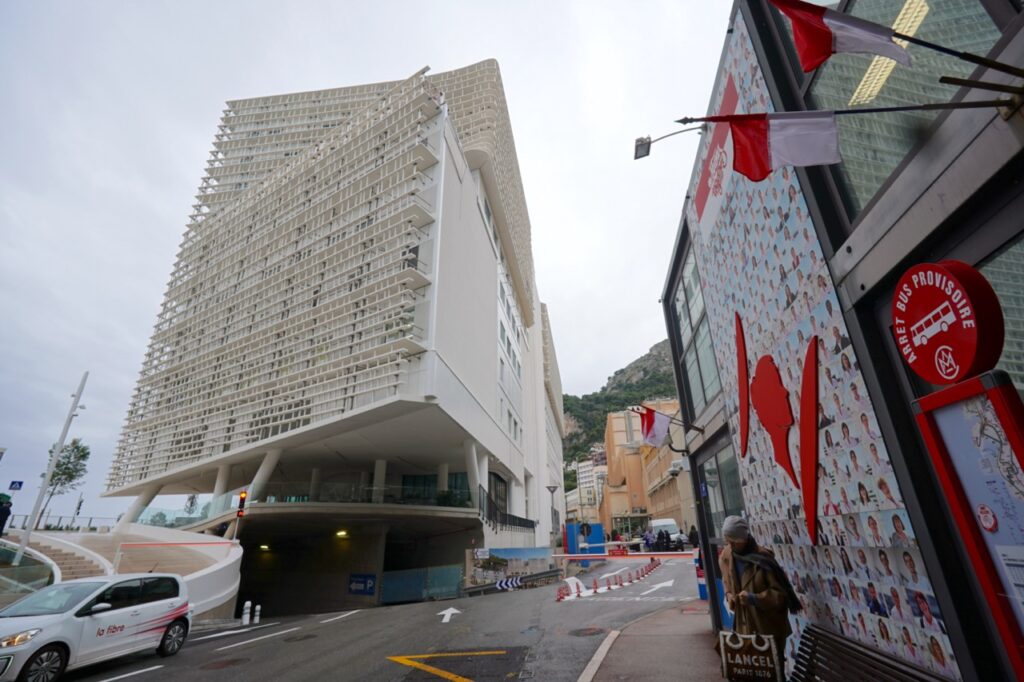
The new CHPG building stands facing the sea, clad in several sunshades © Benjamin Godart - Monaco Tribune
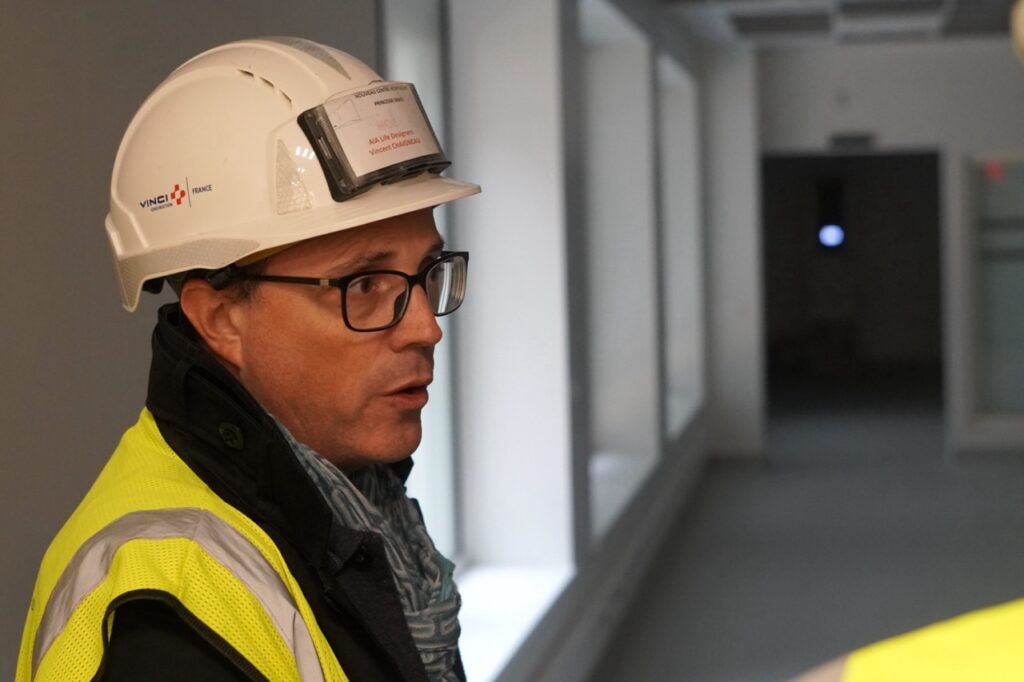
Just months before it opens in 2026, the new Princess Grace Hospital Centre building is revealing itself. Don your yellow safety vest, helmet, and safety shoes and join us on a guided tour with architect Vincent Chaigneau from AIA Life Designers.
On the forecourt: a ‘haute couture dress’ facing the sea
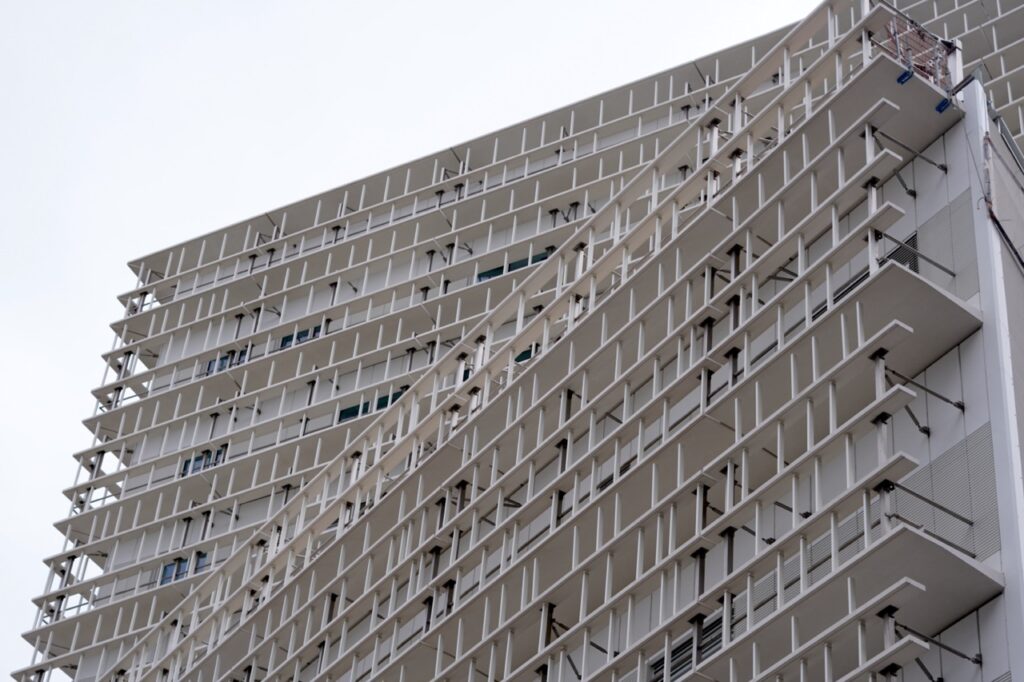
From the belvedere, the undulating façade of the new CHPG is impressive. These fixed and movable sunshades adorn the ten-storey building like ‘a haute couture dress, in reference to Princess Grace and Monegasque elegance,’ describes Vincent Chaigneau. The architect wanted to evoke ‘a veil undulating in the wind’ between the sea and the cliffs, which is reflected in the interior design of the rooms.
The challenge was enormous: to build a hospital on a small plot of land in an earthquake zone. Avenue Pasteur was diverted to free up the necessary space. The result: a concrete structure ‘more than twice the size of a normal hospital, with a foundation slab one metre ten centimetres thick,’ explains Patrick Hardy, CHPG construction manager at AIA Life Designers. All networks are duplicated to ensure continuity of service in the event of an earthquake.
The lobby: the reception area of a luxury hotel
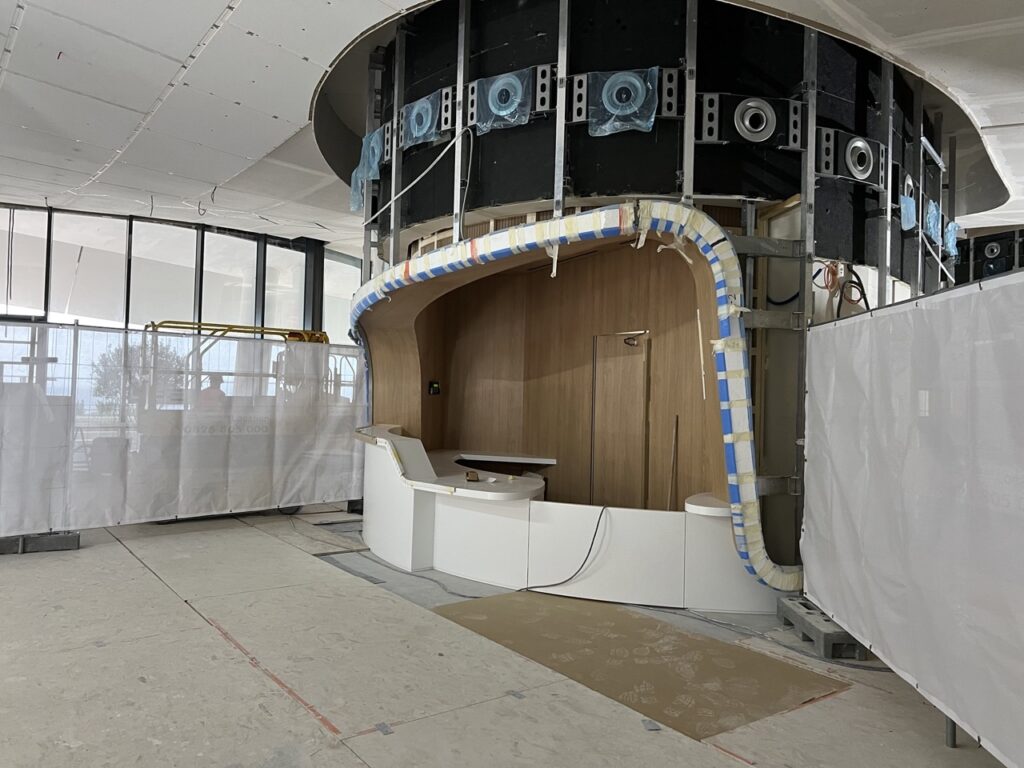
Inside, the lobby is strikingly spacious. Curved islands house the cafeteria, information points and rest areas. ‘Vaults and curves soften the atmosphere, making you forget that you are entering a hospital. It feels like the premium lobby of a grand hotel,’ says the architect, who claims to have been influenced by the codes of the hotel industry.
CHPG unveils 2025-2030 project and four ambitions for its transformation
On the upper floors, too, the attention paid to healthcare workers is evident. With relaxation areas, tea rooms and reserved zones, the CHPG is committed to providing a high-quality environment for its teams.
The corridors: sea blue, earth green
To find your way around this labyrinthine building, a simple colour code is used, which is useful for both patients and hospital staff: blue on the sea side, green on the land side. ‘It seems obvious, but even without seeing daylight, you always know where you are by looking at the wall,’ explains the architect from AIA Life Designers.
Operating theatres: natural light and modularity
A rare feature in hospitals: the operating theatres have views of the outside. The walls, covered with compact laminate panels, stand out from traditional solutions. ‘We chose a different approach to paint, plaster or PVC, as is the case in other hospitals. This material makes cleaning much easier,’ explains the architect.
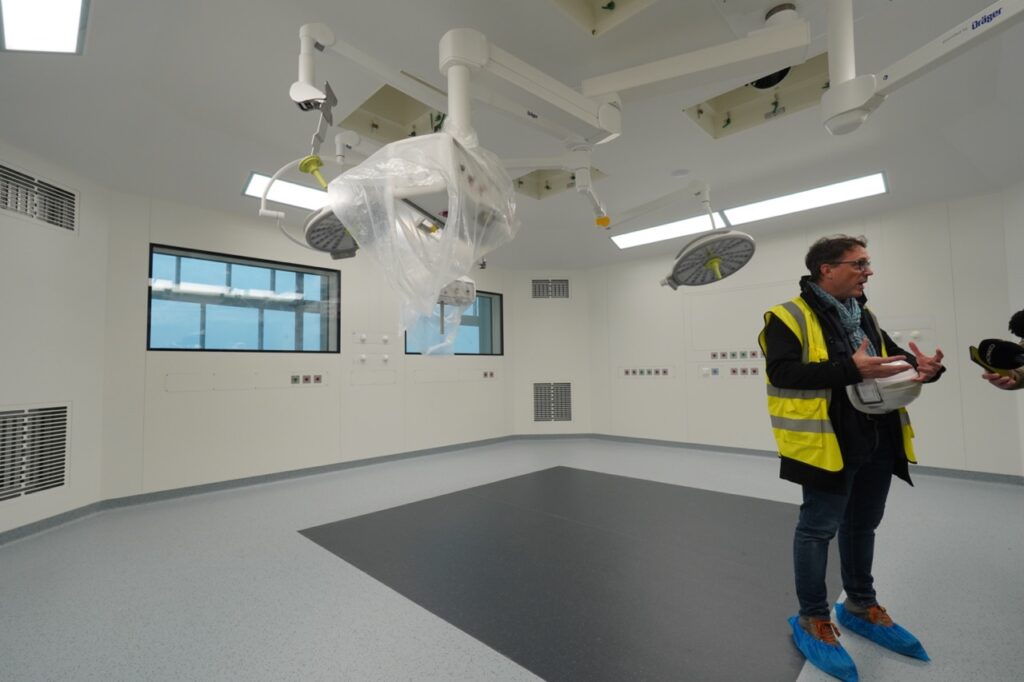
Modularity is another innovation. The panels can accommodate new equipment without major construction work. ‘We don’t break down the entire wall, we just take one panel, equip it elsewhere and plug it in. This reduces the risk of compromising the sterility of the rooms and allows us to resume normal activity more quickly,’ he explains.
Just above, sterilisation operates in a short circuit thanks to dedicated goods lifts (one for clean items, one for dirty items) that transport equipment to and from the operating theatres.
Outpatient areas: six patients under one roof
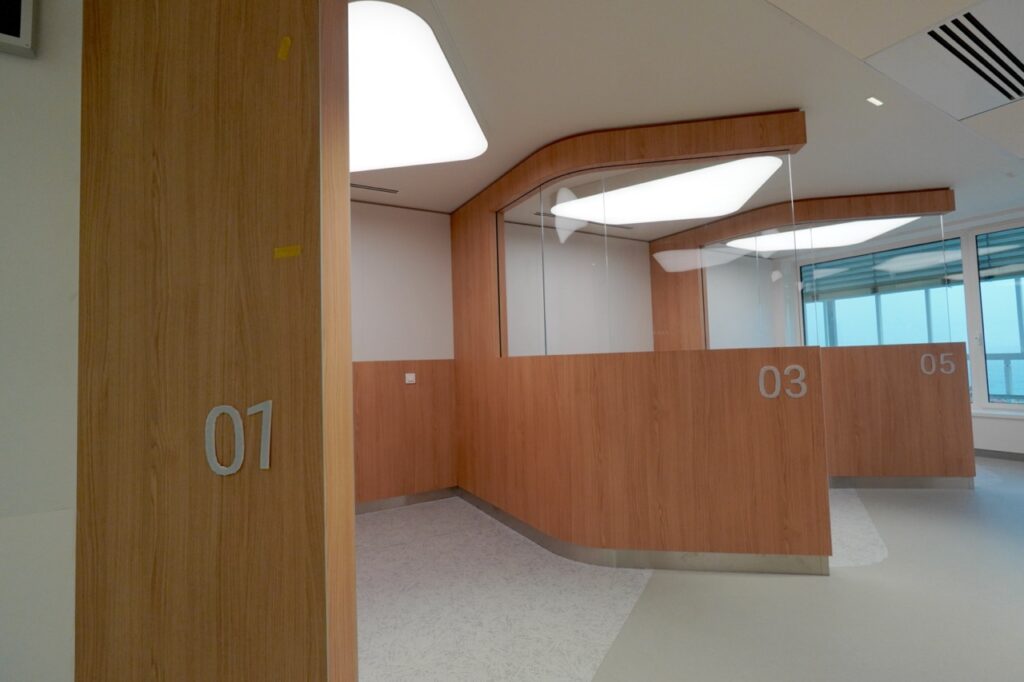
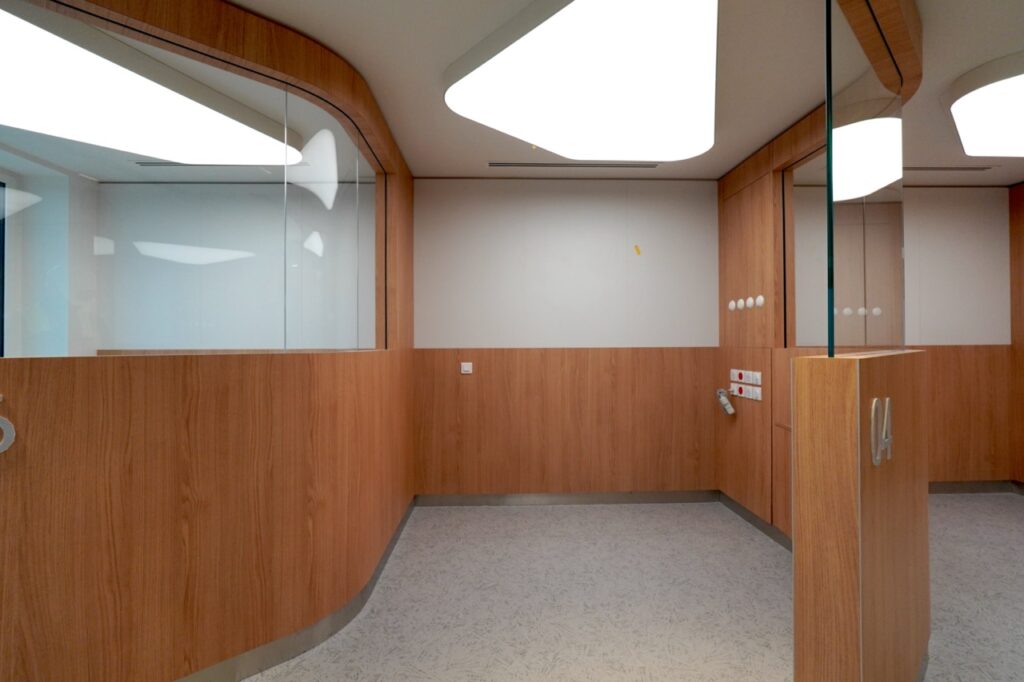
In day hospital areas, the challenge is twofold: enabling medical staff to provide immediate supervision while preserving patient privacy. The twenty-four intensive care ‘cocoons’ each offer a view of the sea. From the central island of each ‘hive’, staff can monitor six patients simultaneously.
Sheer window decals will be installed to preserve privacy. The lighting is adjustable, switching from a subdued atmosphere to bright operating theatre lighting in an instant should it be necessary. ‘All the wooden panel backgrounds have also been treated for acoustic insulation,’ explains Florent Boiselle, director of the Rossi carpentry company, which crafted all the woodwork.
The rooms facing the sea
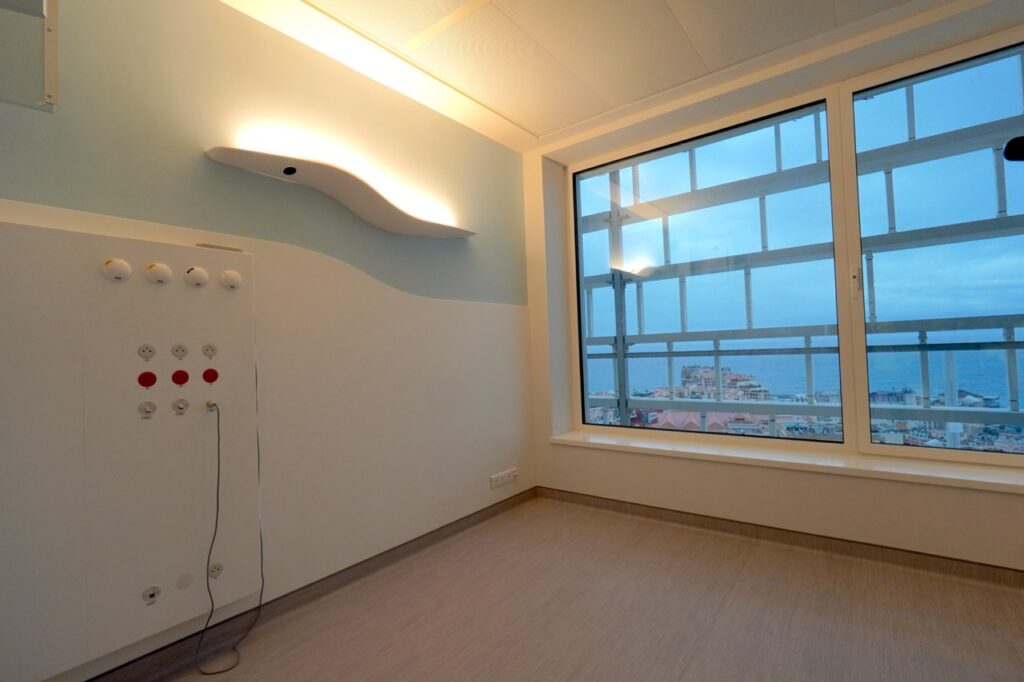
Compact but bright, the 13-square-metre rooms feature huge glass windows framing views of the Mediterranean. The headboard evokes a wave, the lighting echoes the curves of the wind, and the washbasins have been custom-designed to soften the lines. ‘We try to minimise the reasons why people go to hospital,’ says Vincent Chaigneau, before pointing out that the advantage of this exterior architecture is that it also conceals technical elements, such as cables and air treatment infrastructure.