



Monaco’s lunar rover Mona Luna aces first tests in race to the Moon
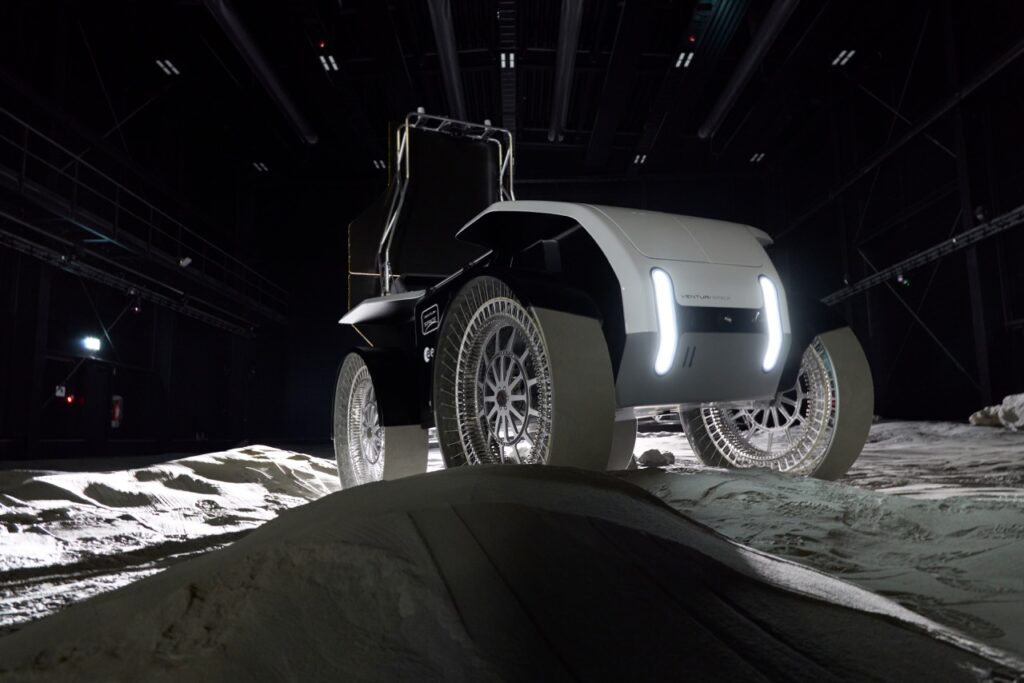
The Mona Luna rover stands out for its 100% European technology © Venturi Space Romero
The lunar vehicle developed by the Monégasque company Venturi Space has brilliantly passed its first driving tests, paving the way for a potential European mission to the Moon.
Five months after being unveiled at the Paris Air Show, Mona Luna has just demonstrated its capabilities at the European Space Agency’s (ESA) Luna centre in Cologne. On this terrain replicating lunar conditions, the 750kg astromobile climbed slopes reaching 33 degrees, far exceeding the objectives set by Venturi Space’s engineers.
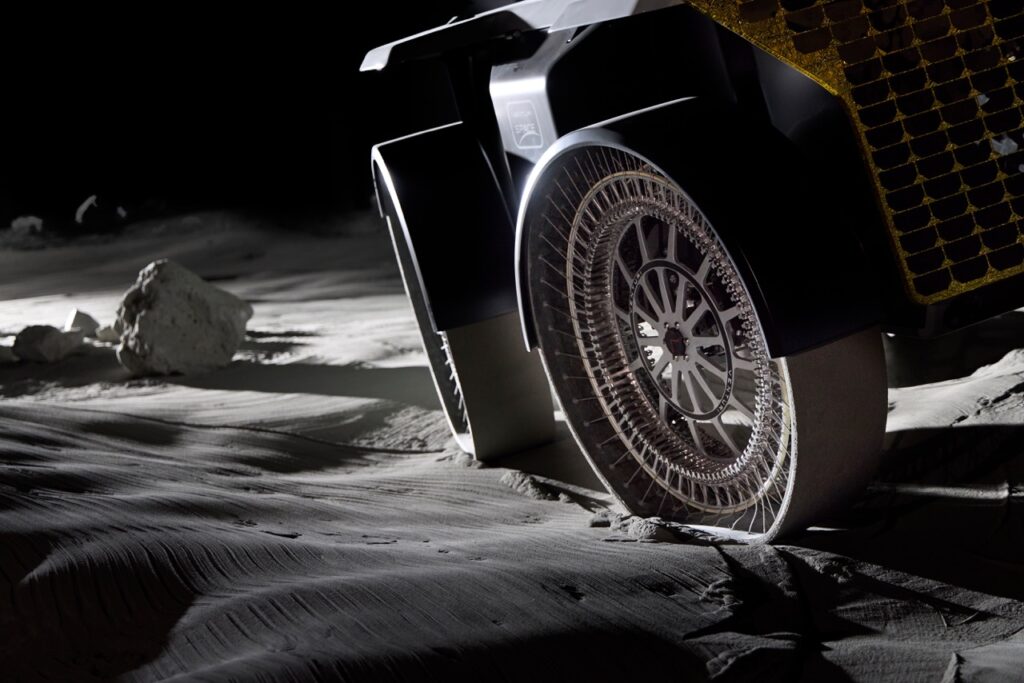
The hyper-deformable wheels, whose technology was validated by NASA between 2022 and 2025, particularly impressed observers. “Seeing its wheels deform and adapt to the regolith, slopes, and rocks… it’s remarkable,” said Daniel Neuenschwander, director of human and robotic exploration programmes at ESA. Their ability to “float” on loose soil constitutes a major asset, as Dr Antonio Delfino, director of space affairs at Venturi Space, explained: “It’s essential to avoid getting bogged down in lunar regolith.”
A European collaboration led from Monaco
For Daniel Neuenschwander, integrating Mona Luna into a European mission “would be a very fine opportunity for Europe”. Gildo Pastor, president of Venturi Space, savours this success whilst keeping his feet on the ground: “We know we’ve accomplished only 1% of the journey that, I hope, will take us all the way to the Moon.”
The project brings together Venturi Space’s three sites: Monaco and Switzerland focus on wheels, thermal systems, and batteries, whilst France handles assembly. In spring 2026, Venturi Space will lay the first stone of its new 10,000m² site in Toulouse, near the National Centre for Space Studies (Cnes). This centre will welcome 150 engineers in the first half of 2028 to finalise Mona Luna’s design and manufacture. By then, the company will have been able to observe its technologies under real conditions on the Moon, aboard the Flip rover.