





Charlotte Casiraghi makes literary debut with a philosophical essay on fragility

With her book La Félure, Charlotte Casiraghi rejects the image of a perfect life © Monaco Info Communication Department / Manuel Vitali
Prince Albert II’s niece has written a literary and philosophical essay that questions our fragilities, far from the smooth image often attributed to her.
Published on 29 January by Julliard, “La Félure” marks a milestone for Princess Caroline’s daughter. At 39, she has written her first solo work, after co-authoring “Archipel des passions” with philosopher Robert Maggiori in 2018. The book is based on a short story by Francis Scott Fitzgerald and draws on texts by Marguerite Duras, Ingeborg Bachmann, Colette and Anna Akhmatova. In it, the author explores what makes us fragile and how to transform this flaw into creative strength.
Alexandra of Hanover and Charlotte Casiraghi in Paris for Fashion Week
Beyond the perfect image
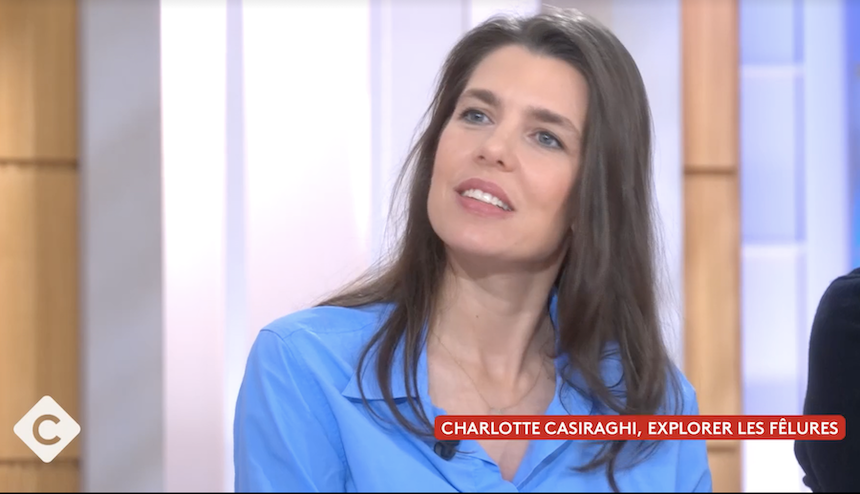
In the introduction, Charlotte Casiraghi directly addresses the media attention she has always been subject to. “I have often been reduced to an image on glossy paper, to a life of dreams and privileges,” she writes. This book responds to a need to show another reality. As a guest on the programme La Grande Librairie on 28 January, she spoke of the gap between her public image and her inner reality: “I have too often been reduced to a smooth image, to a life of dreams and privileges,’ she confided, explaining that this book allows her to tear away that surface: “Life in magazines is not real life.”
She also developed her vision of the fissure as a space between the surface and the depths, quoting Gilles Deleuze to explain that we must not allow ourselves to be defined solely by our wounds: “The very essence of the book is to show that with what hurts and weakens us, we have to do something, move it elsewhere, be able to find a gap, a distance. If we cling completely to the dramatic or tragic aspects of our lives, we have no chance of getting out of them.”